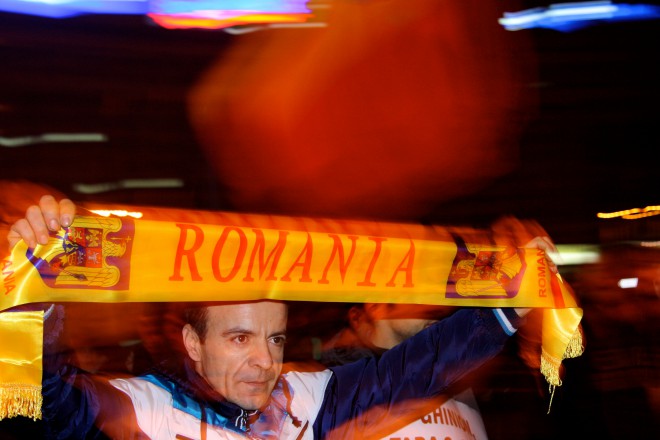
How the Romanian capital still kills me—a version/preview for an article in Vice

I first came to Bucharest as an English teacher in the 1990s, subsequently visited several times as a tourist, returned as a journalist, and then started a family in the Romanian capital.
This is what has changed:
When I was here in the 90s, the taxi drivers said to me:
‘You are here for the girls, right?’
Ten years later when I returned, they said to me:
‘You are here for the property, right?’
But in the last decade, ever since the financial crash of 2008, all they have ever said to me is:
‘Why are you here?’
The city still makes no sense to me.
When describing their home nation, Romanians often used to repeat to me the old joke about Italy or France:
“Beautiful country, shame about the people”.
But with Bucharest, you could reverse this to:
“Wonderful people, shame about the city”.
Its main asset is its talented, educated, metropolitan residents. But if the city doesn’t sort its shit out soon, these wonderful people will continue their ongoing exodus to London, Berlin and Cluj.
Why?
Because Bucharest is a city in a constant state of arrested development. It cannot make its mind up which Bucharest it wants to be.
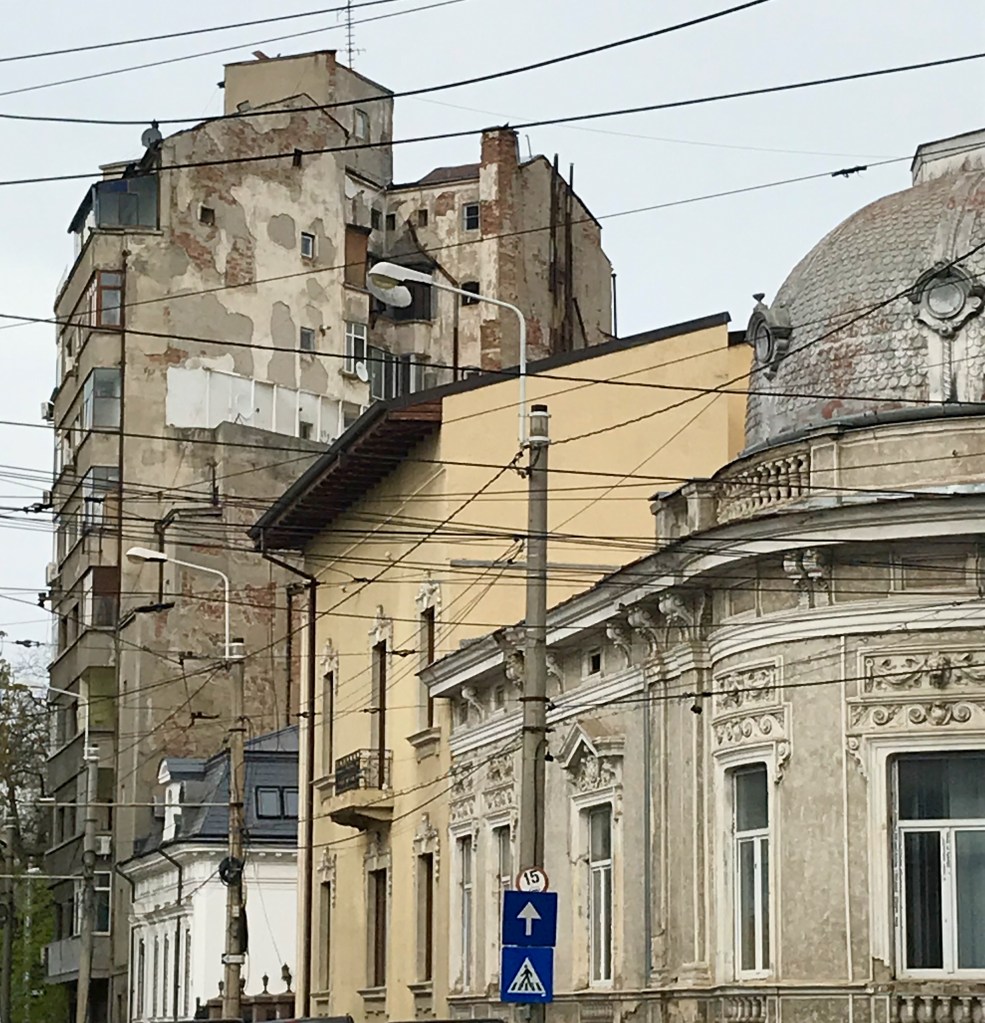
It is as though a master architect had a brilliant urban concept in a consistent style, and sold the idea to the city bosses, who ordered the foundations to begin, and raised the first buildings.
But after a few years, the city sacked this architect, and brought in a new one, who had a brilliant urban concept in a consistent style—a better one than before, and sold the idea to the city bosses, who ordered the foundations to begin, and raised the buildings, but left those of the former architect.
After a few years, this second architect was kicked out, and another came in, and another, and another, placing Bucharest in a state of flux where, at the same time, nothing changes.
The result is a hybrid city of alternative visions, none of which have ever been fully realised, so that when one walks through its streets, it feels as though different designs, materials and infrastructure are in conflict with each other.
It would rather be at war with itself, than fully be itself.
Sadly much of its most dazzling architecture is usually hidden behind trees, billboards or tall fences, or caked in dirt or a sham 21st century refit.
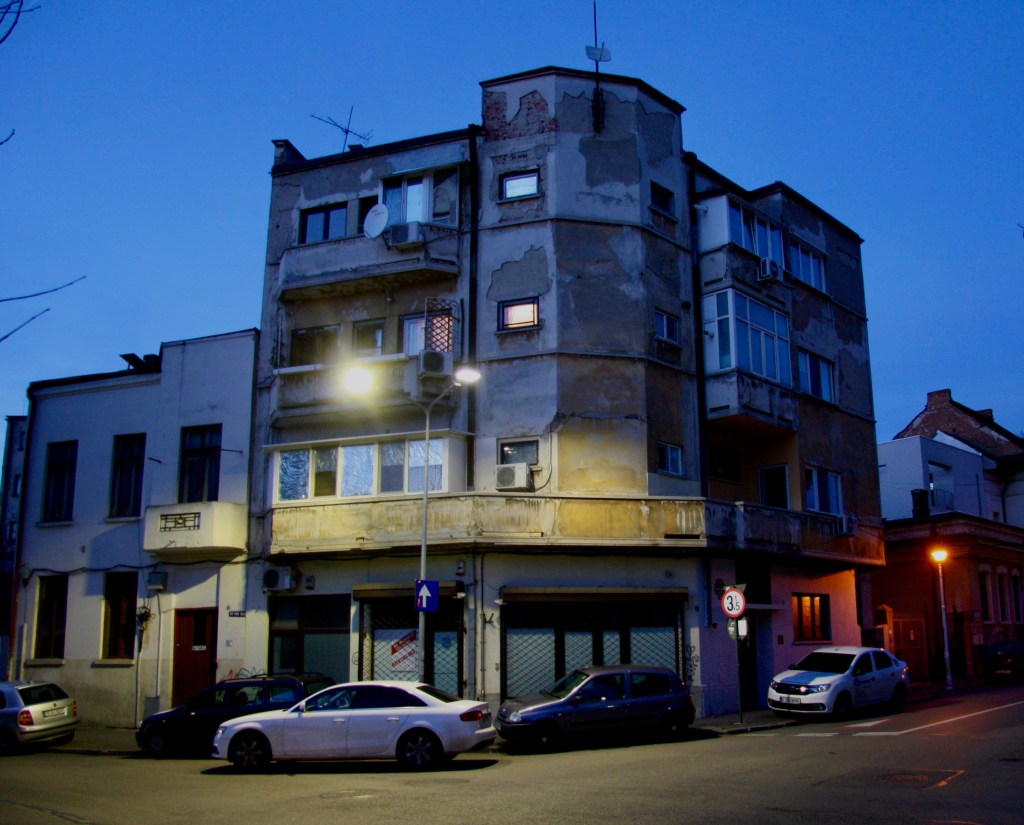
On the one hand, this is annoying and absurd, and, on the other: eclectic, original, unique and mysterious.
Many tourists and residents call the city ugly—but it’s ugly in the same way that people describe teenagers who scuff up their trainers, mess up their hair, or hide their face under a fringe, grimace, pout, and swear—from a conventional perspective, if the kids clean up their act, they could be pretty, but from an unconventional one, why should we be so conservative in our notions of what is beautiful?
The city tests its residents’ patience, torments them, deceives them, and gives little reward, and I have tried to understand Bucharest, but, after living here for many years, here is what still confounds me:
Why do people still orientate themselves around buildings that no longer exist, and streets that no longer have the same name?
Why does this city change the names of streets and parks ALL THE TIME, such as Parcul Herestrau to Parcul Regele Mihai, or Blvd. Unu Mai to Blvd. Ion Mihalache? I understand there is politics at play, but it feels like the role of City Hall is to troll Google Maps.
This creates a disparity between what is, and what is understood to be.
A few years ago, when I was at Piata Unirii, I needed to find Strada Poterasi, which was nearby, and asked the passers-by for directions. They pointed me towards Parcul Tineretului, along Dimitrie Cantemir Boulevard, and said “It’s just passed Budapesta”, in reference to a classic restaurant.
I walked down Dimitrie Cantemir for 15 minutes, and I still couldn’t find Budapesta. I arrived at Parcul Tineretului.
Here, I asked some people for directions to Strada Poterasi, and they pointed me back in the direction from which I had come, and said:
“It’s up there on the right, before you reach Budapesta.”
After finding myself again at Piata Unirii, I realised that the restaurant no longer existed.
But the people who lived here did not know what had replaced this landmark, as it made no impression on them. It was easier for them to orientate themselves around locations that had stood there before—as though their understanding of the urban landscape was trapped in the past, but still real.
Why does the city hide bus stops?
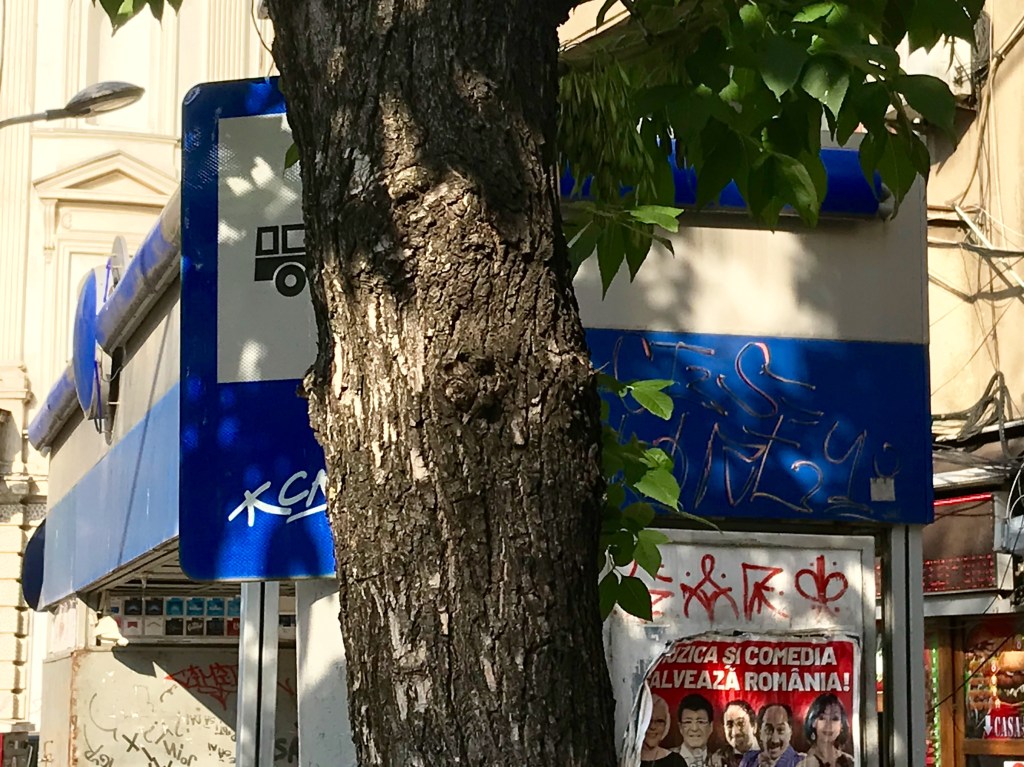
It is tough to find a bus stop in Bucharest. I don’t understand why the city hides them. On main thoroughfares, their shelters are concealed within adverts for banks, streaming services and telephone companies. In the less crowded areas, they are small metal lozenges nailed to a lamp-post, and are often twisted, busted, rusting, or obscured behind a tree.
If I find a bus stop, it has no timetables, there is no map, nor does it mention where the bus is coming from, and where it is heading.
So if I want to catch a bus, I wander the streets, and hunt them down, and when I spy one, I run after it, hoping that it stops near me, and I have enough time to climb aboard.
But I can never be sure that its destination is where I want to go. I think I know. I ask the passengers. They think they know. But I am not sure. They are not sure.
All I have is a number and hope.
This is like the world’s saddest lottery.
Why does the city not want its people to be part of the city?
Why are there so many barriers between areas where there are no divisions?
Around the blocks are fences separating pavements from the land, which is often no more than a patch of earth, or overgrown grass, often strewn with trash.
Many times cars are parked across the entire pavements, so there is no space to move between the road and a fence that protects a field of mud.
The citizen can only walk in the road, and risk being killed by a car. The city values the pedestrian less than automobiles—or dirt.

In almost every non-residential building, there are security guards, who patrol buildings and spaces, where there is little of value. In fact, the only thing of value in the country may be a business in hiring out security guards.
In the parks are stretches of lawn where, if they are fresh and new, people cannot walk on them, and there are plants that children cannot touch, and trees they cannot climb. Late last year, when Parcul Timisoara in Militari opened, the signs on the grass warned: ‘Lawn Closed! Do not walk on the grass! Pets are forbidden!’
Yet there, on the grass, were giant plastic Disney characters, including Olaf, the OCD snowman from Frozen, and Pluto, on all fours, with his tongue hanging out.

In Disney’s universe of talking animals who act as humans, he is the solitary pet dog.
Why does no one complete this zebra crossing?
On Calea Grivitei is a zebra crossing that, for many years, has white lines on only one half of the road. It is as though the crossing has lost the will to finish its journey to the other side.

Pedestrians have a choice. They can walk to the middle of the road, see there is no further right of way, and then walk back the way they came. Or they can walk to the middle, and stand there, for hours, days, or perhaps even years, waiting for the City Hall to paint the remaining lines.
From a legal perspective, the crossing has issues. If a pedestrian is in a traffic accident, they are only allowed compensation on one half of the road. So remember, if you are hit by a car while crossing Calea Grivitei at this point, make sure to tell a friend to move your body to the part of the crossing where the white lines are painted.
Why do the traffic lights take so long to turn green?
Where Calea Victoriei meets Piata Victoriei in the city’s central business district is a traffic light where a pedestrian has to wait 2 minutes 49 seconds to cross three metres of road.
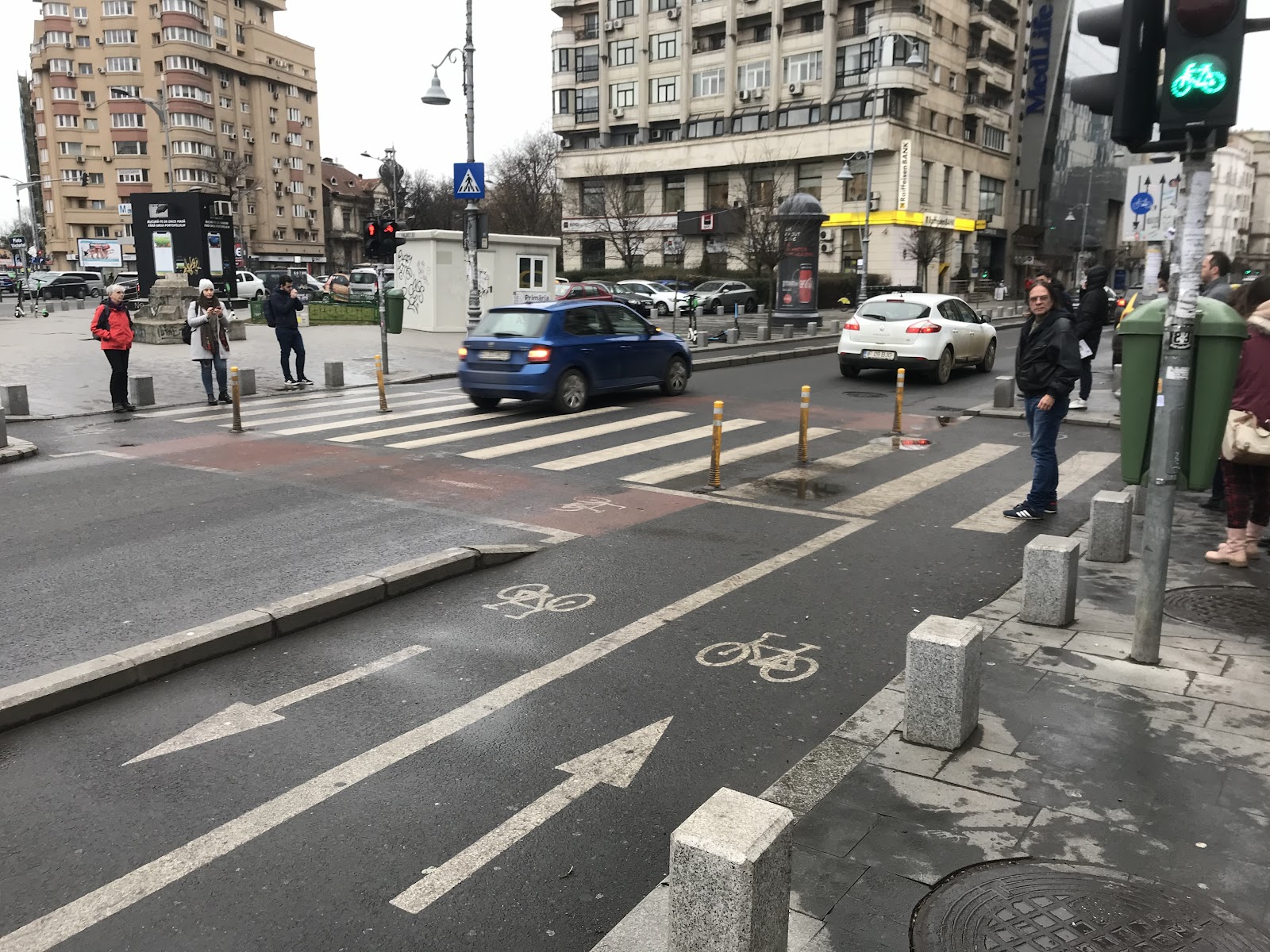
While they wait, two separate lanes of cars feed into Calea Victoriei. This is the city indicating to anyone stupid enough to move through Bucharest on two legs that their choice of transport is twice as less important as those with four wheels. To get around this, many pedestrians make the leap when no cars are shooting past, and risk a fine from the cops for jaywalking.
Looking for an alternative, I walked 170 metres down Calea Victoriei to the next pair of traffic lights, crossed the street, and walked to the other side, opposite to where I was before.
The time it took me?
2 minutes 47 seconds.
These traffic lights should have a sign telling pedestrians that if they want to reach the other side faster, they should use a crossing further along the road.
Why is the memorial to the Holocaust in the middle of a car park?
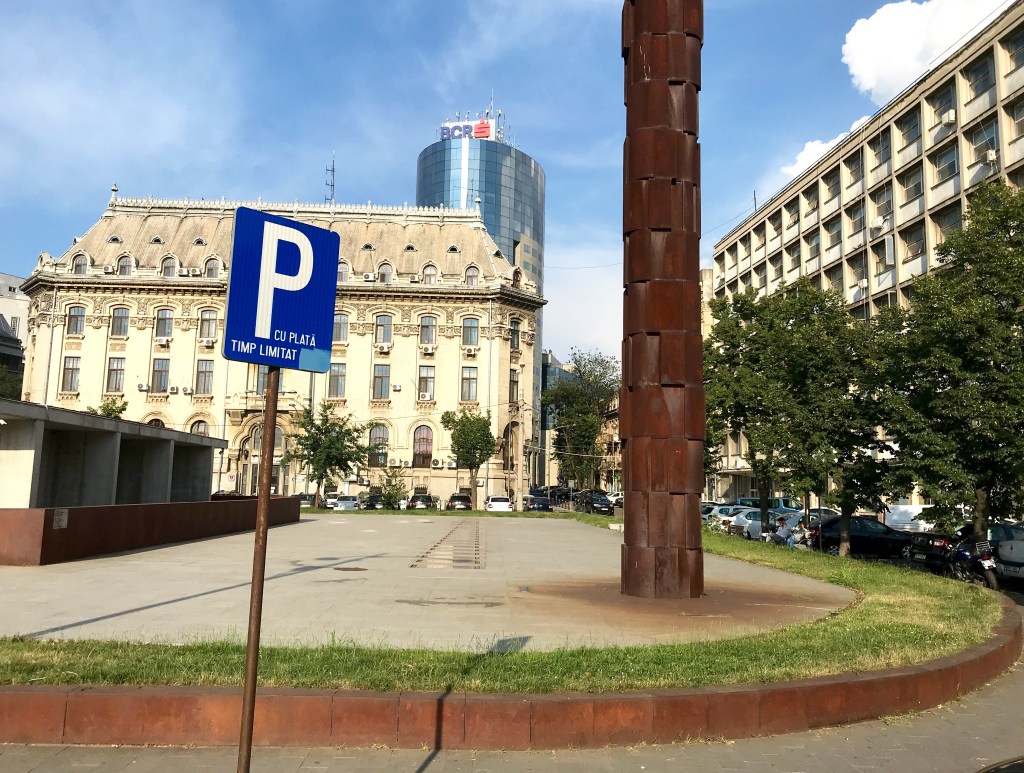
Hundreds of thousands of Jews were killed on Romanian territory in the second world war, along with thousands of Roma victims. Visual artist Peter Jacobi’s graceful and subtle memorial to this slaughter—a trio of industrial sculptures and a concrete wall leaning down to a sunken enclosure—is hidden among a sea of cars. Only its 17-metre cast-iron tower is visible to nearby pedestrians, but the impact of visiting a site that commemorates one of the most tragic moments in Romania’s history is undermined by the fact that, even here, even the memorial to the Holocaust is suffocated by automobiles.
Why does nothing ever disappear?
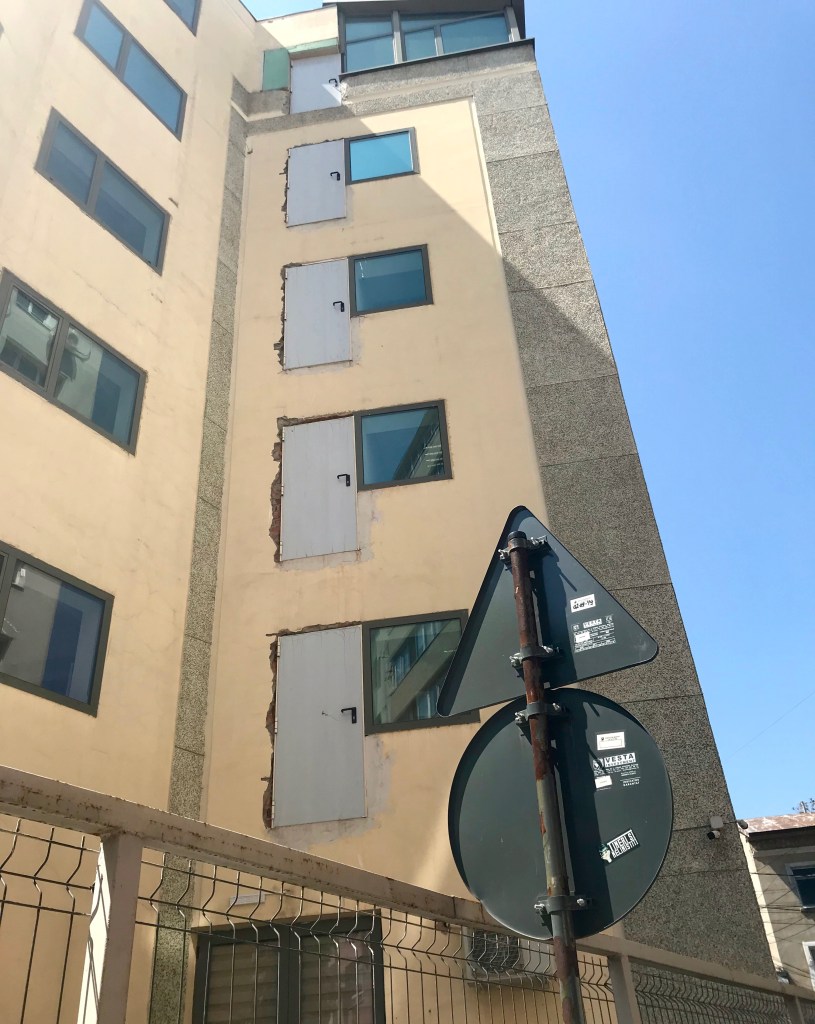
On most buildings are indications of the past – satellite dishes, a sign for a coffee shop that has not existed for a decade, a faded work of street art on concrete steps, a piece of graffiti from five years ago, which is in dialogue with another piece of graffiti from three years ago, and a further one from last week.

Nothing is allowed to die.
If I was to write a poem on the side of a disused fuse-box in the center of Bucharest, I would expect to come back in two decades, and find the verses still there, and the fuse-box still disused.
The city shows all its layers of history at once, like levels in an archaeological excavation. The past is ever-present, such as a broken public telephone, a tangle of wires, or the cobblestones of demolished streets near Strada Uranus, or in Parcul Vacaresti. Even when the Communists tried to obliterate the past with grandiose schemes and, today, when the Capitalists wreck and rebuild the city plot by plot, the city can’t help revealing what it was.
It would be great to preserve, enhance, build on this innate characteristic of the city—this may be its greatest asset.
Where is the public space?
The irony is that while the city is so keen on exposing itself, its residents are so private. Most do not engage with the public space, and stay in homes where they have enclosed their balconies to shut them out from the street. It feels as though the people refuse to believe that public space exists, except in shopping malls and public parks. This is not a criticism. They have every right not to engage with their city, if the city does not invite such engagement.
This is true especially when the city transforms even the most precious sites into a 3D billboard. Piata Universitatii is the hub of the Revolution, and the site of the Mineriade. People were shot dead here for freedom. This is the sacred heart of Bucharest.
Yet the city hall hires out the space to promote beer and chocolate, including for German discount supermarket Lidl, on the 30th anniversary of the victory of the people against communism. Is this what people died for?

Because the city is dense, I walk everywhere in Bucharest, often for hours a day, and I understand the suffocation by cars, fences, adverts, building works, pollution that puts off less masochistic pedestrians.
When I walk home from the center after 11 at night, even on a Friday or a Saturday, I may pass nobody. It feels as though the city has been abandoned by its own residents. It makes me wonder whether there will be a time when I am walking the streets every day, and see no one at all, ever again.
Full article here in Romanian.
 Michael Bird Writer & Journalist
Great article, Michael, speaks to me in so many ways. I love Bucharest, but it’s always felt like one of those sad relationships where one person clings despite the other sending out every ‘leave me the hell alone’ message they can.