
An investigation into dangerous animal sales in Romania. Written with Ovidiu Stancu. Published in Scena9. Watch the film here:
Summary:
- Dorin Soimaru is a 62-year-old zoo owner and breeder of large mammals in Suceava, north Romania, who offers to sell dangerous live animals through illegal means, as well as offering ‘over-the-counter’ sales
- From 5 September, his zoo was suspended from operating by an order from the country’s Environment Guard, which inspects environmental violations, yet he still offered our reporters a package of animals for sale: including servals, baby tigers only a few weeks old, two lions, a white tiger and the liger – a hybrid between a lion and a tiger, for prices between 2,500 and 50,000 euros.
- In a second zoo behind a supermarket, which is officially closed, Soimaru secretly keeps two lions, three servals and one tiger, all for sale
- The zoo owner also forced a sick baby white tiger with visible physical injury to perform in selfies with visitors, and he forced a baby liger to pose for selfies despite exhaustion
- Another seller of wild animals in Ilfov county, near Bucharest, offers raccoons for 400 euros and raccoon dogs for 250 euros, which are illegal to breed, keep and sell according to an EU directive, as they are invasive species
- Our team has also found a pet raccoon dog in a house in Ilfov county, and four tigers living at the back of a lorry car park in Cluj next to dorms for foreign workers, indicating there is a wider, more troubling issue of dangerous animals kept in private or enclosed locations
- The EU lacks harmonised laws on the keeping of large animals, and the laws on the trade of animals in Romania are vague, leading to legal loopholes that allow the illicit breeding, sale and keeping of wild and dangerous animals to thrive
Inside a private zoo at the edge of the town of Zaharești, Suceava county, stands a row of big cat enclosures, where dangerous animals live in cramped and muddy conditions, with nothing to occupy their time but copulation and waiting for food.
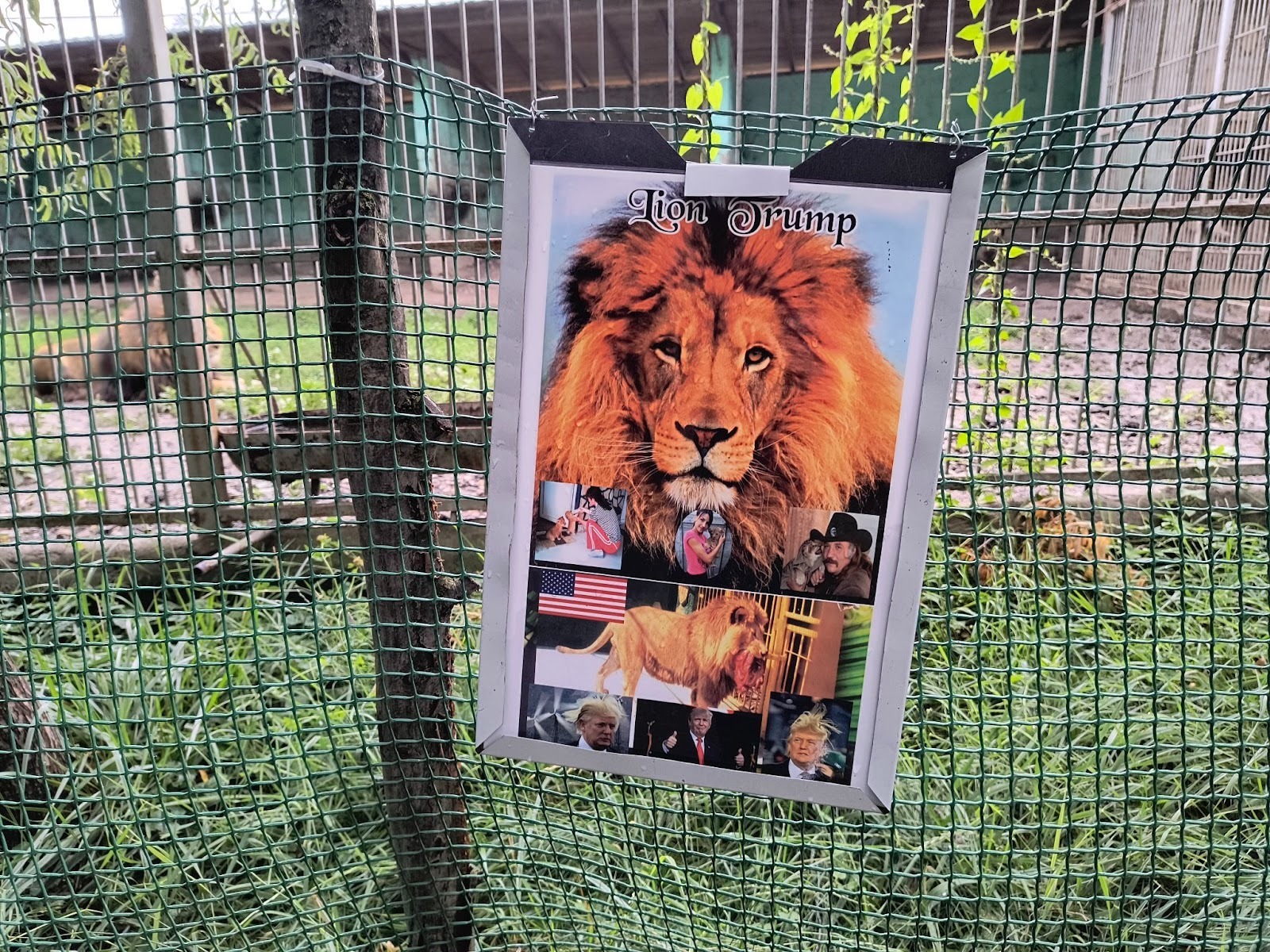
In front of a lion cage is a poster with a collage of lions from the zoo and the president of the USA, his orange comb-over loose in the wind, like a lion’s mane. The title states ‘Lion-Trump’. A few metres away is another collage showing the current Russian president in camouflage, stroking a reclining tiger, possibly dead from a gunshot wound. Its title: ‘Tiger-Putin’.
The owner of the zoo, 61-year old former construction boss Dorin Soimaru, says there is a story attached to these posters.
Before Russia’s full-scale invasion of Ukraine, Soimaru travelled 500 km to the US embassy in Bucharest, a heavily-guarded mini-Pentagon on the outskirts of the city.
He demanded to speak to someone about a proposal. In his hand, he carried photos of two lions, which he could no longer keep. After some waiting, a spokesperson at the embassy came out to talk to him.
Soimaru showed his pictures to the official.
“I am donating these two lions to all the Romanians who live in the territory of the United States,” says the animal breeder. The animals had two collars. One read ‘Donald’ and the other read ‘Trump’.
The Embassy declined to take him up on the offer.
A couple of hours later, Soimaru went to the Russian embassy on Blvd Kiseleff, another blank fortress ringed in barbed wire and CCTV. This time he came with a photo of a tigress, called Putin, because he saw that Putin had created an NGO for saving Siberian tigers. A counseller came outside to speak with him, and he told the Russian:
“I am giving you a tigress free for Russia.” The counseller looked at the photo and said: ‘We will contact you’.
Soimaru tells this story without irony, implying that he believed the US and Russian administrations would consider taking his leftover big cats as a sign of goodwill between nations.
“And then, what happened?” he says. “A few months later the Ukraine war broke out.”
In the rural community 30 km from Suceava where Soimaru has lived for decades, he has been a man with power and influence. In his home village of Ilisesti, a supermarket and a car wash bear his family name. He is always in the local news, showing off exotic animals he has bred, including lemurs, macaques and big cats, or fighting with the authorities over his right to display dangerous mammals. Portraits of him dressed in a cowboy hat and leopard-skin tank-top, holding a snake or a tiger cub, decorate the outside and inside of his zoo, alongside his family and friends. When he was annoyed with a local mayor’s involvement in a recent decision regarding his zoo, he took a newborn tiger into the town hall and dumped this on the mayor’s desk. For what reason, he can’t explain. But the message was: I am somebody important. I have tigers.
However, his legacy is a zoo which has grown too large and too fast with too many animals, and is in desperate conditions. Worryingly, he sources his animals from all around Europe, using questionable methods.
But the largest concern is that he is selling off animals, sometimes on the black market, and is part of an illicit trade that is growing across Romania and eastern Europe, which supplies private pet owners with dangerous animals.
The Hybrid Zoo
18 May Zaharești, Suceava
In 2004, construction business owner Dorin Soimaru saw an article in the local press about two lions who were starving in old greenhouses in Romania, and decided to adopt them. A few months later, he brought the felines to his house in Ilişeşti, Suceava county. He started “collecting” more animals, and in 2011 he jacked in his construction business and used the cash to finance his hobby.
In 2024, he opened a large “private zoo” at the edge of a small town in Zaharesti, in a depression in the land opposite an empty field. Here he is breeding barbary macaques, dwarf goats and lemurs, birds of prey from Russia and Moldova, and lions and tigers. There are 570 animals here.
On a warm Sunday afternoon, two reporters, myself and Orlando, visit Noah’s Ark, to find out more, although we keep our identities secret. We discover severely unsanitary conditions. Moldy fruit layers cages for birds, rabbits and monkeys. In the tiger enclosure is the carcass of an unplucked chicken, stretching out its limbs, the flesh rancid. One tiger is drinking muddy rainwater. The baboons have their own house called the ‘baboon temple’. Outside they run around on a patch of mud and the males strut around, visibly aroused, tormenting the females.
Soimaru tells a member of our team at a later stage:
“We make exchanges with other zoos. We buy from abroad. Many birds are from Hungary, Slovakia, Yugoslavia, Holland, from outside the country, where there are fairs and expos. A lot of breeders among us who are private know each other.”
The zoo also has two lynx, which he brought from Slovakia in 2023. There are also invasive alien species such as raccoons and squirrels in his zoo, which are banned in the EU to keep, breed and sell.
There are only a few visitors and Soimaru himself is open to chat. Orlando and I introduce ourselves as undercover businessmen who work in Dubai, and he invites us to sit at a table with him. With the base of a cigarette lighter, he opens a bottle of Ciucas beer. On the table in front of him is a goldfish tank with murky water the colour of bleach and a couple of empty bottles of Fratica beer. In the background play children’s nursery rhymes in Romanian.
Soimaru speaks fast and with a strong accent, rarely answers questions clearly, and often gives contradictory points of view. It’s hard to understand exactly what he means half the time – but his opaqueness appears to be a strategy. He will talk about how he has handed over money to local officials as a form of gratitude but “I never bribed” and how he “gives” animals away, even though he offers animals for money.
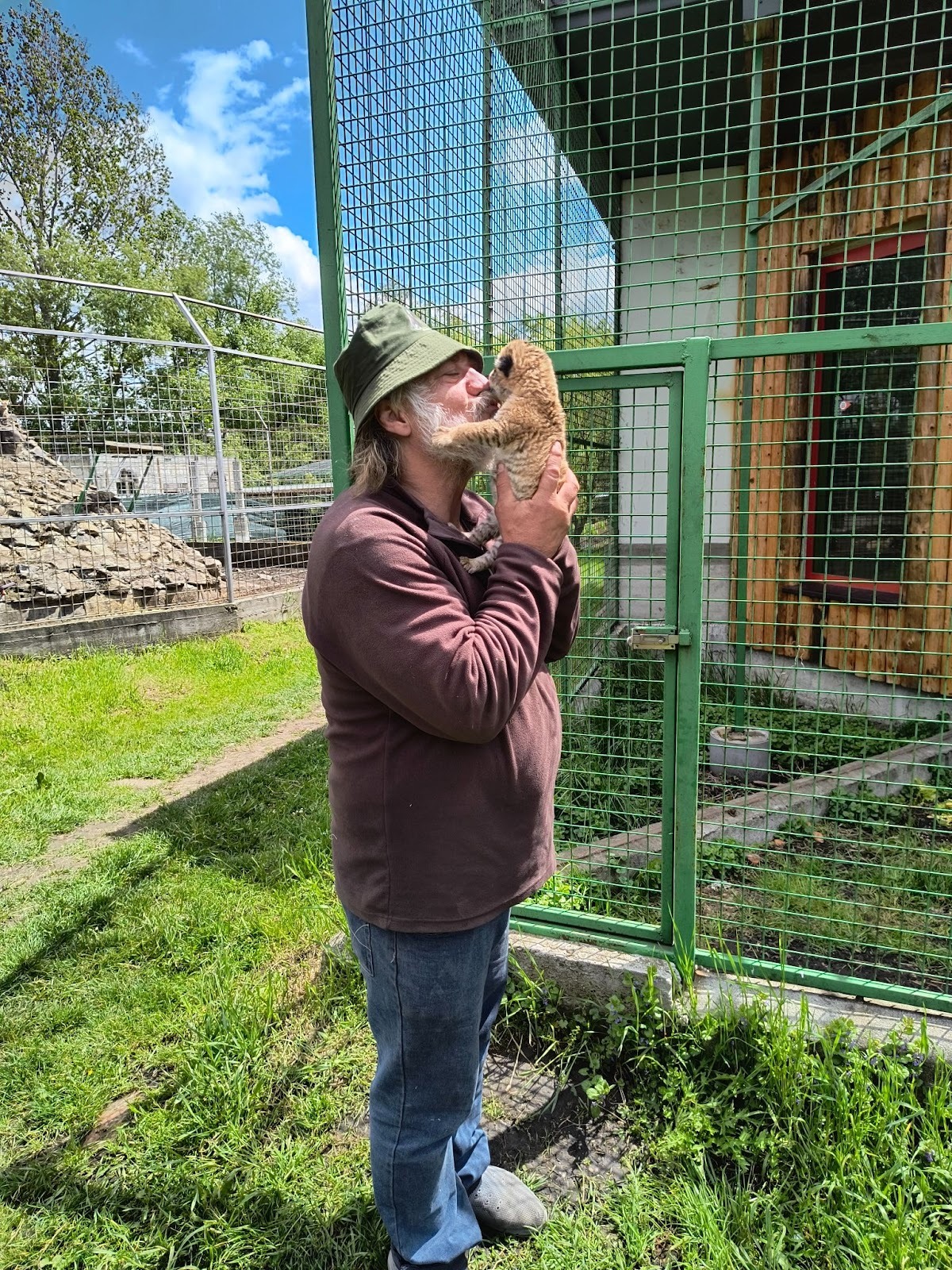
Dorin and Goliath
Two weeks ago, one of his female tigers gave birth to two cubs. The father was a lion. The offspring were two ligers, which attracted international criticism. Such ‘hybrids’ do not exist in nature, as lions and tigers inhabit different continents. The cubs often carry health risks.
Soimaru later says to our team:
“I am accused of breeding from the two races, yes? What difference does it make if they are both felines, but one from one continent, and one from another. What happened? It’s like black man took a white woman, yes?”
In 2017, two zebras came to Soimaru for two months before they were taken to Constanta. They stayed in a pen next to a Shetland pony. When they left the pony was pregnant, and later she gave birth to a zebroid – a combination of a male zebra and female pony. The Zebroid is still here, like a stocky horse with black and white stripes fading into his beige hide.
The liger, named Goliath, crawls across the grass, its eyes closed, barely able to see, squeaking. Soimaru took it away from its mother and father a few days after its premature birth. The cub even has his own vaccine and medical card, where its name is written in English as ‘Goliath – King of Zaharesti.’
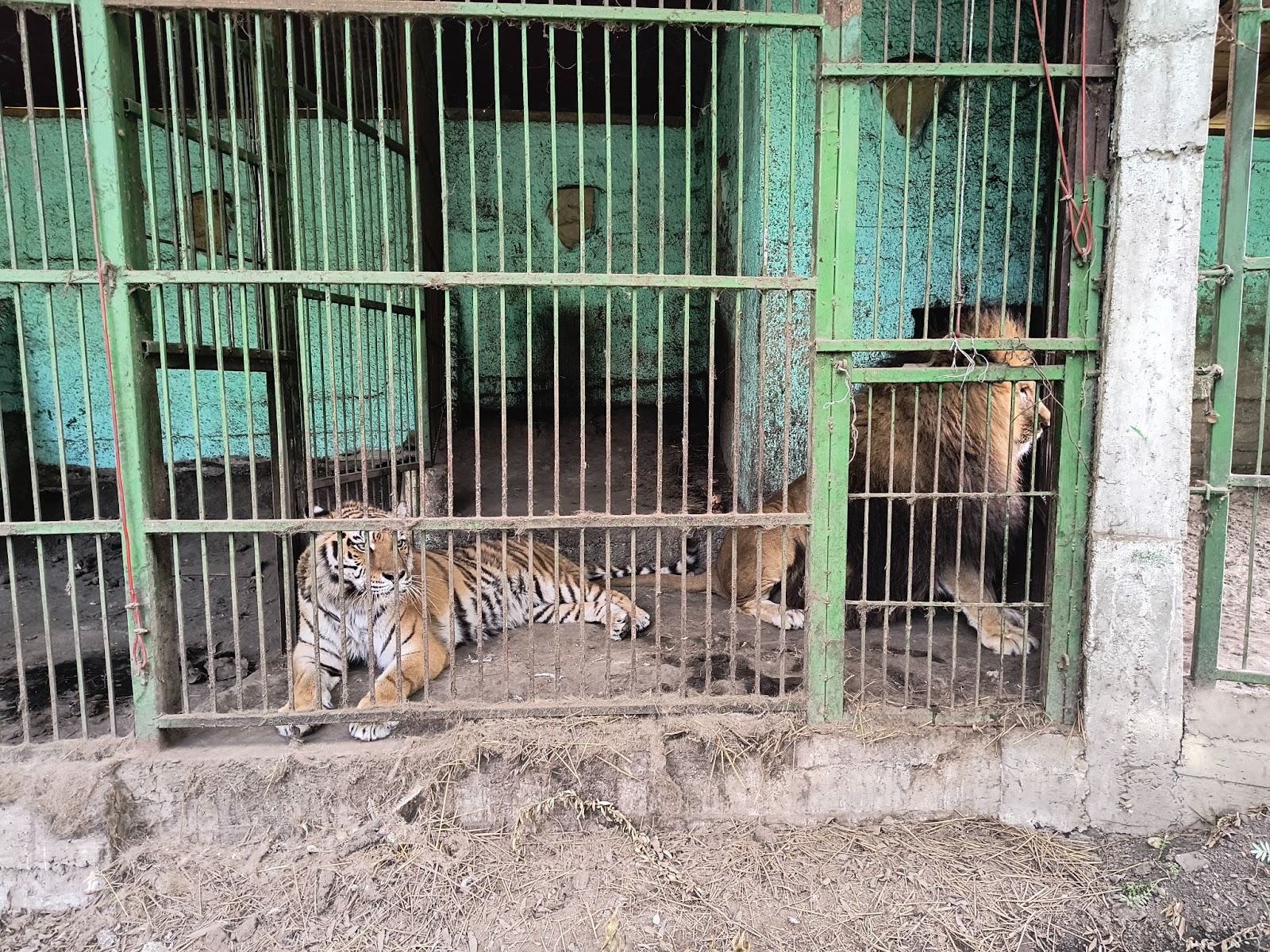
Goliath’s parents
Goliath’s father stays in a small roofed enclosure with the mother, and no space to graze in the sun. The male growls and slams its giant paws against the cage-door. He could be angry about losing his two children. A young lion or tiger should be weaned on its mother for six to eight months.
“Taking cubs away from mother at two or three weeks is quite common among breeders who think by cutting the connection between the mother and the cub, the child will shift its affection towards the human, and they will be easier to domesticate,” says Sajmir Shehu, an Albanian coordinator for NGO Four Paws.
However the cubs don’t receive proper nutrition and natural immunity, and many grow up with problems with their bones. Meanwhile, the mothers return to fertility at a faster rate, and can be used to breed more cubs.
“It may be effective from a trading point of view. but for the health and the welfare of the animals it’s quite bad,” says Shehu.
Orlando and I tell Soimaru we have a rich friend called Ahmed Al-Sadek, a Libyan multi-millionaire, who is opening a zoo in Tripoli.
Soimaru says that “if he offers a good price” he can give some animals from the next litter.
The First Offer
13 June
A month later we return to Zaharesti. We come with powdered milk for Goliath, who is staying in a play-pen inside the zoo gift shop.
Orlando asks him about the second baby liger.
“What happened to the other one? You said it was at the vet.”
“It passed away,” Soimaru says.
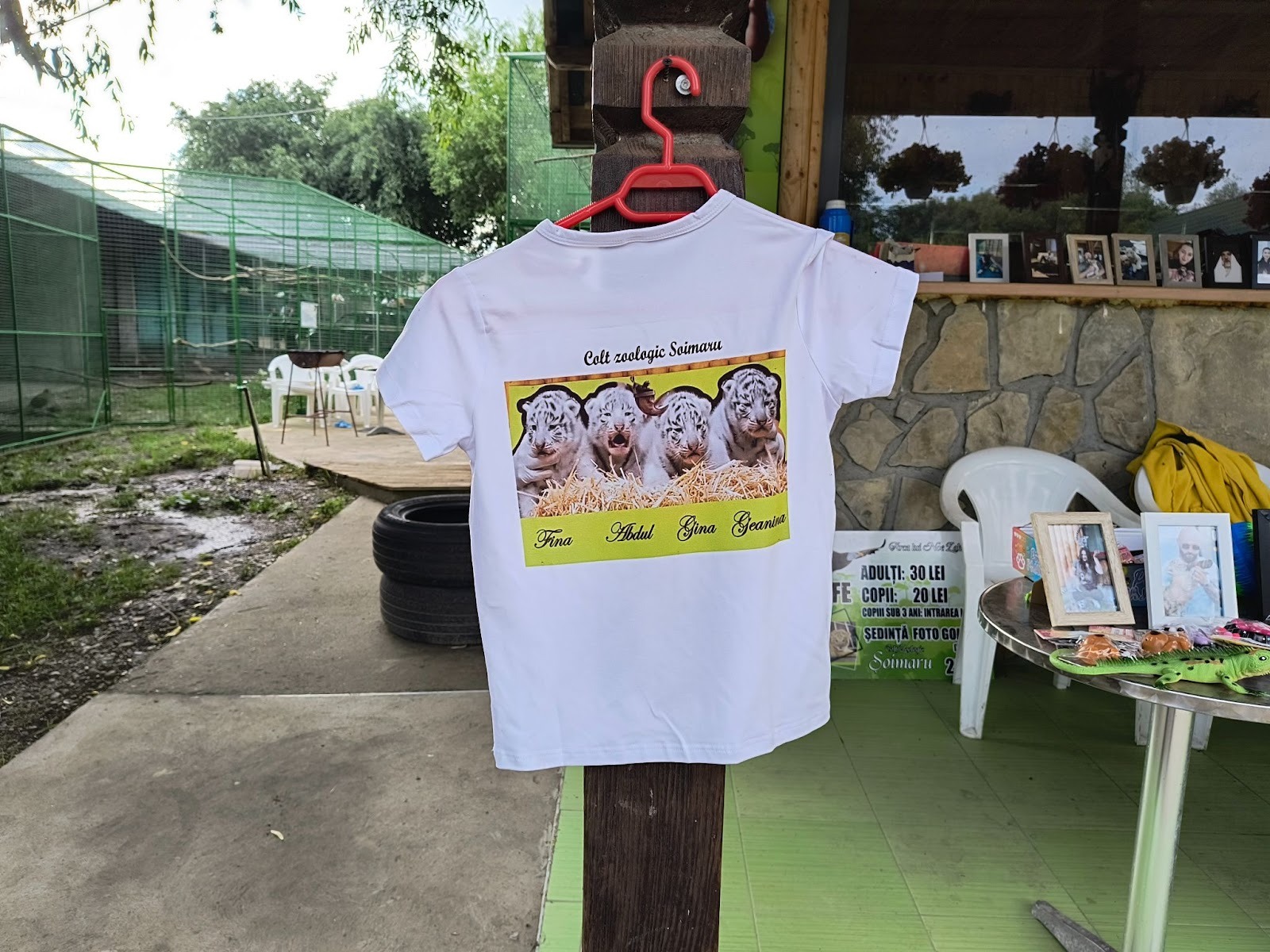
Four white tigers: two to Craiova, one to Cluj, one stay at home
The zoo boss has been “looking after” four white tiger cubs, whose faces are printed on a t-shirt for sale. Two of the girls went to Craiova zoo in April, which is owned by the local municipality. This was a “barter”, says Soimaru, for monkeys: “I gave tigers and I got capuchins.”
A third went to an entrepreneur specialised in fixing automatic gearboxes. He owns four big cats, which he keeps in an enclosure on the outskirts of the city of Cluj, next to a dormitory for guest workers and a truck park. The big cats are “donations” from Soimaru.
In the past, Soimaru says he “gave” tigers to a zoo in Barlad, and to other zoos as well. He has also dealt with the zoo in Piatra Neamt, which is now closed. He is clever not to use the word ‘sold’ and he won’t tell us how much money he sold them for.
It does not seem to be too hard for him to let them go. There is a sense that Soimaru loves the animals when they are small, but loses interest when they grow larger. “What am I going to do when they grow up?” he says. “Everything is beautiful when it’s little.”
Soimaru wants to drink with us. In the gift shop, where he sells plastic and fluffy toys and souvenirs of the zoo, are shelves of empty bottles of spirits. He shows me a bottle of Jack Daniel’s Cinnamon Spice. He says this is a good spirit, as it’s something men can drink, because it’s bourbon, and women can drink, because it’s sweet.
From a lower shelf he brings out a clear bottle of plum brandy – tuica. In front of the main building, we sit and drink. He has no shot glasses, or any clean glasses at all, so we use the kind of plastic measuring cups that sit on top of bottles of cough medicine.
Tiny flies are drawn to the tuica’s heady perfume, and drink in the spirit, before sinking to their death. I pick them out of my cup with my fingers.
Soimaru asks what ‘noroc’ is in English. I say ‘cheers’. He says ‘cheers’ and we knock back our fly-drowned shots.
Soimaru says we can do business. He can get one or two “small Siberians” and he says he can give them “with papers, in order” or “without papers”.
“I can give them either way,” he adds.
For a Siberian tiger, he says the price would be 5000 without VAT, if it’s “without papers” and with papers, VAT is added on.
Visitors pass by and he chats to them about where to go in Suceava county. To one couple from Botosani, he says that after the Putna monastery, one of the best places to visit in the area is Zoo Soimaru.
A woman talks to Soimaru about monkeys, which she loves, and how legal it is to keep them. He knows a woman who keeps monkeys in the city of Constanta. He adds that the local Veterinary Authority (DSV) can be very relaxed about allowing private persons to keep wild animals:
“If you don’t expose them to the public, like in a zoo like mine, the demands are very few. The [vet authority] comes to the house, he sees the space, and the animals won’t be tortured or exploited, and…”
He wants to says “cheers” in English all the time, and we chink our measuring cups.
We finish a bottle and he goes inside the gift shop and takes out a funnel. Then he picks up a six-litre canteen of tuica and pours this into the bottle, refilling it to the top.
While I sit with the drink, he leaves to make an inspection on the zoo, checking on his staff and attending to guests. When no one is looking, then I pour the tuica back into the bottle. The inside of the cup remains spotted with dead flies.
At the entrance of the zoo, we prepare a grill. We pile up pieces of wood. Once the flames subsist and the grill is hot, we add vegetables and mici – minced sausages of sheep and beef.
I ask him what his favourite animal is. He says it’s the female eagle. Because his name, Soimaru, means the falconer, a man who hunts with hawks.
“Every morning she goes: luuu luuu. She’s speaking to me. The falconer.”
When the meat and vegetables on the grill are ready, we ask Soimaru how we can serve the food. He only has a large plastic wash-bowl. We pile the food inside. We ask him if he has plates. But he does not have any plates. We ask if he has cutlery, but he doesn’t have those either. Instead, we have to pick the vegetables out of the wash-bowl and eat them with our fingers. He does have a jar of mustard, which we dip the mici inside. We use kitchen roll to wipe our greasy hands.
I try to drink a sip of tuica, to show I am a good guest, but this is making me sick.
As I reach for the measuring cup, Soimaru berates me.
“You only drink tuica until the food comes,” he says. “Now we drink wine.”
The Liger Business
19 July
When Orlando returns to Noah’s Ark, the liger business is picking up. Videos of Goliath have gone viral on Instagram and TikTok, and hundreds of visitors are coming to the zoo to take pictures with this phenomenon. Soimaru has built an enclosure for the baby big cat, layered in artificial grass and piled with cuddly toys.
A sign says 30 lei [six euros] for a picture and a frame with the liger. Most visitors are paying 20 lei [four euros] for a photo with their phone.
The zoo is understaffed. One of Soimaru’s neighbours allows paying visitors into the liger enclosure, while Soimaru himself takes cash at the entrance, no receipts given. Orlando sees that visitors are wandering around unsupervised, and starts helping out, allowing guests into the lemur enclosure.
Soimaru tells us he has been sleeping with Goliath in a house at one end of the zoo. But now the animal is getting bigger and they can’t share a bed together anymore. The job is starting to stress him. He is thinking of retiring or making a partnership with the City Hall to keep the zoo open.
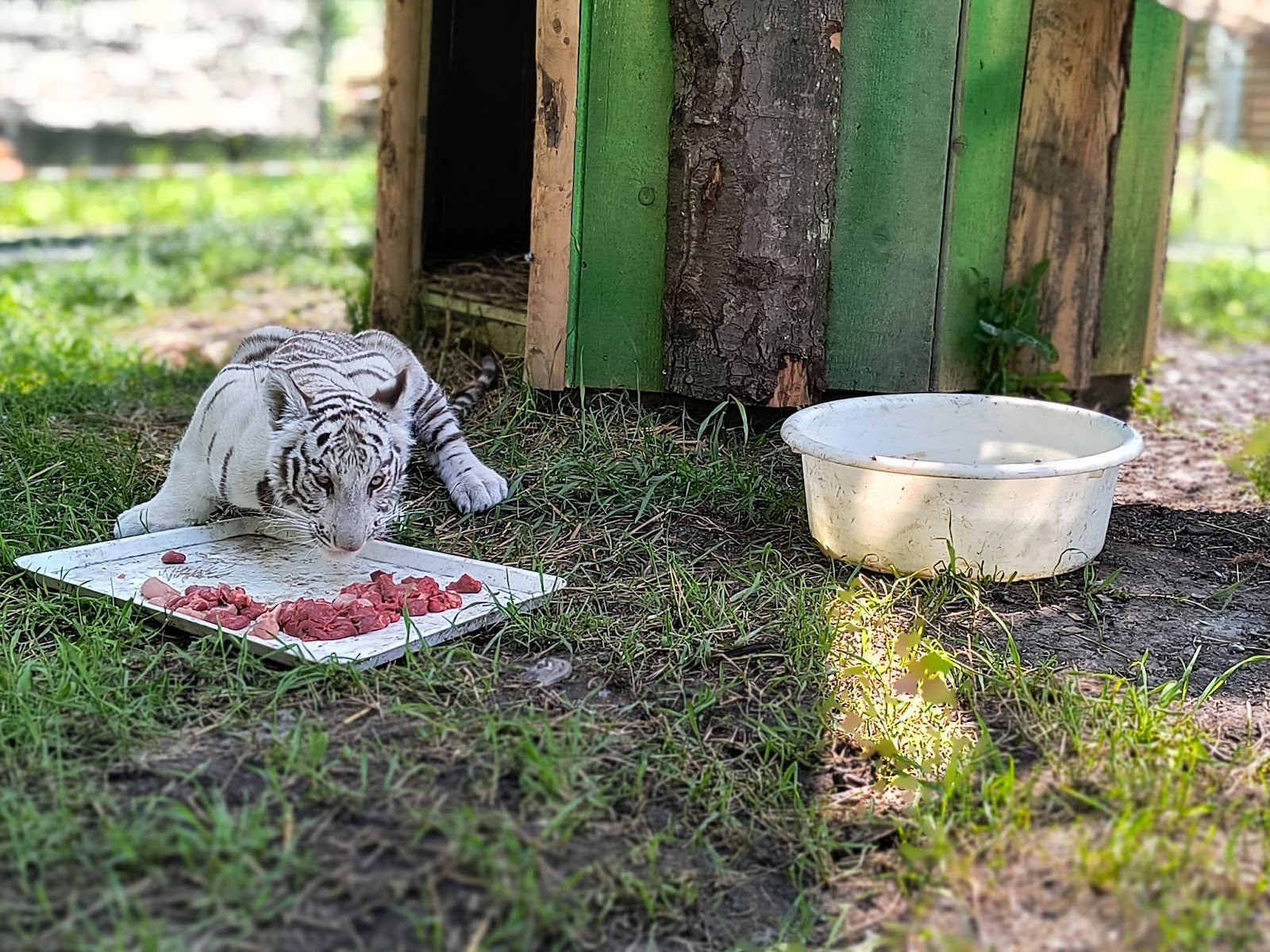
Fina, a white tiger
The last of his white tigers, Fina, is limping around her enclosure and splutters every few seconds, which could be a sign of breathing difficulties. She fell during a storm or jumped from her tiger-house, one zoo-worker tells Orlando. Now she has a problem with her leg. Despite this visible malady, Soimaru sells visitors access to Fina “to play” with her and a picture for 50 lei [ten euros].
When Orlando chats with Soimaru again, they talk about buying Fina. Soimaru says someone in Targoviste offered him 15,000 euro for Fina, but he refused.
After negotiations, we ask the last price.
“If I have 22 in hand, this won’t hurt.”
A discussion follows about whether this is with VAT or not. Soimaru is vague about this, and says that he can’t have it on black because “he will have to declare it dead. I need the doctor, some certificates” and he is worried about appearing in the newspapers.
He is referring to a strategy that corrupt zoos have used in the past: they declare an animal such as a lion cub is dead, and then sell the animal on the black market to a collector. In 2013, in Craiova zoo, arrests were made after a lion’s birth was not recorded and it was slated for sale on black market.
Soimaru has another zoo. This lies ten kilometres away from the first site, in Ilisesti, behind a supermarket and a car wash which are named after Soimaru. Faded photos of Soimaru and his family hang from the outside of the cages. This is his former zoo, which is officially closed, however he still stores dangerous animals here, and offers them up for sale.
A door opens into a yard filled with waste wood and building materials. Inside stand cages with corvids, two lions, a hawk, and a cross-breed between a japanese akita dog and a wolf. There are no guards, only a guard dog wandering around which barks and does not attack.
There was a sloth there. Now, no longer.
Orlando asks about the animal. Soimaru doesn’t like them.
“I don’t like them at all,” the zoo owner says.
“No?”
“[A visitor needs] patience for half an hour before he sticks his head out…”
“And what did you do with him?”
“A peasant from Ploiești took him. Well, he’s wanted him for six years.”
“And what does he do with him?”
“I don’t care.”
He shows two servals, who live in a dusty and dark cage. The leggy mid-sized cats hiss when humans near the enclosure. They are not happy.
Soimaru says that he can give over the servals “without”, referring to the fact he can sell them without authorisation. They are only six months old, and come from Slovakia.
There are also two lions, a boy and its mother. He “gave” the daughter away two weeks previously. These are also for sale.
The Backyard Zoo
Not only is Soimaru selling exotic animals in illicit conditions.
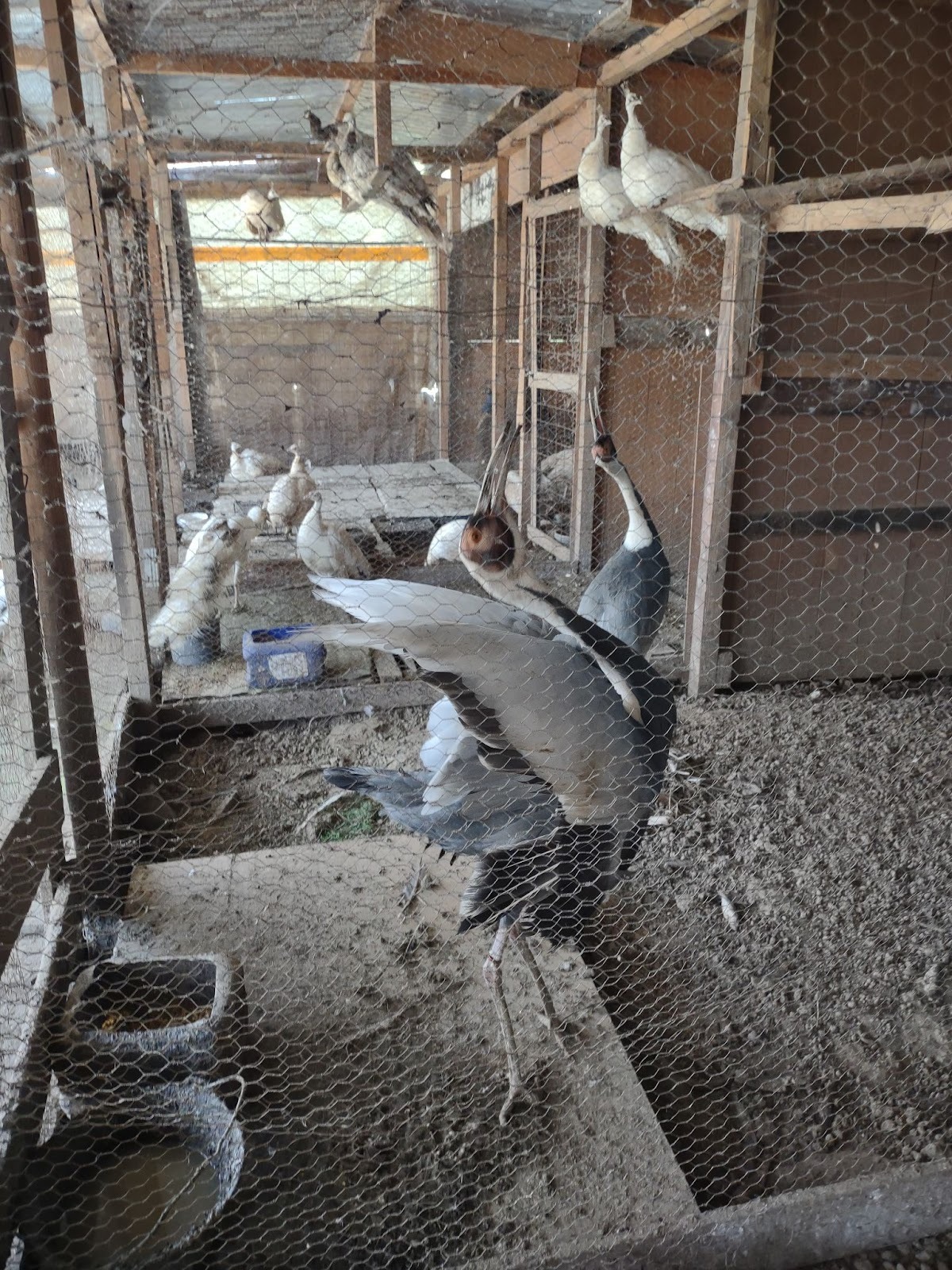
At the back of a house in Afumati, just outside Bucharest, is a court of animals, kept secret behind a screen made up of an old fabric billboard. Inside is an open space with kangaroos, cranes and hens. This is run by a long-distance driver who can bring animals to order, such as small crocodiles. Two servals are on the way. He shows a photo of two alert, wide-eyed servals huddling terrified at the back of an animal carrier.
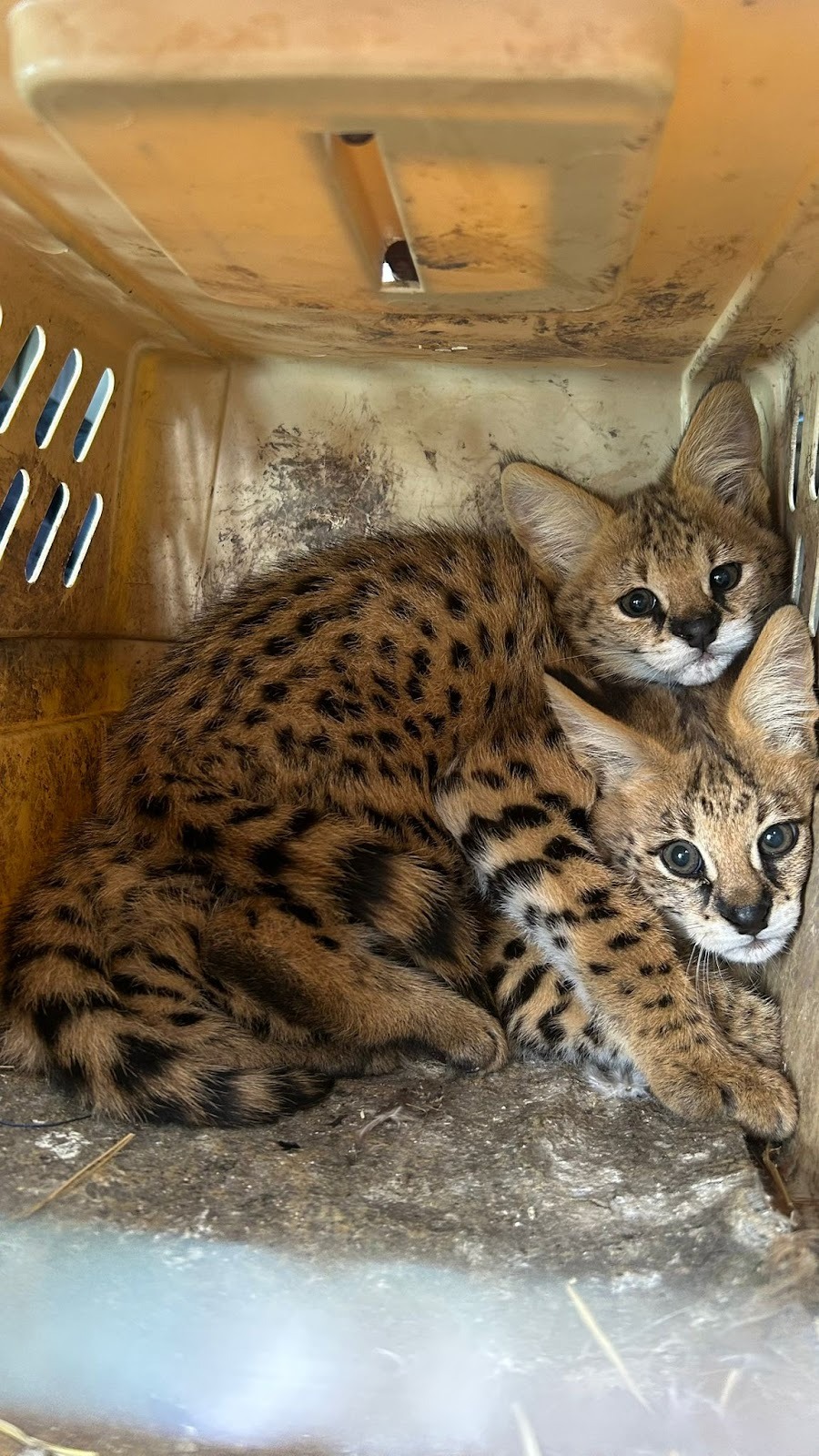
The kangaroo is 800 Euro. The grey crowned crane is 2,000 euro. The rhea 200 Euro. The emu 100 euro. The serval 2,500 euro. He shows photos of marmosets, gripping their cages, looking hungry and desperate.
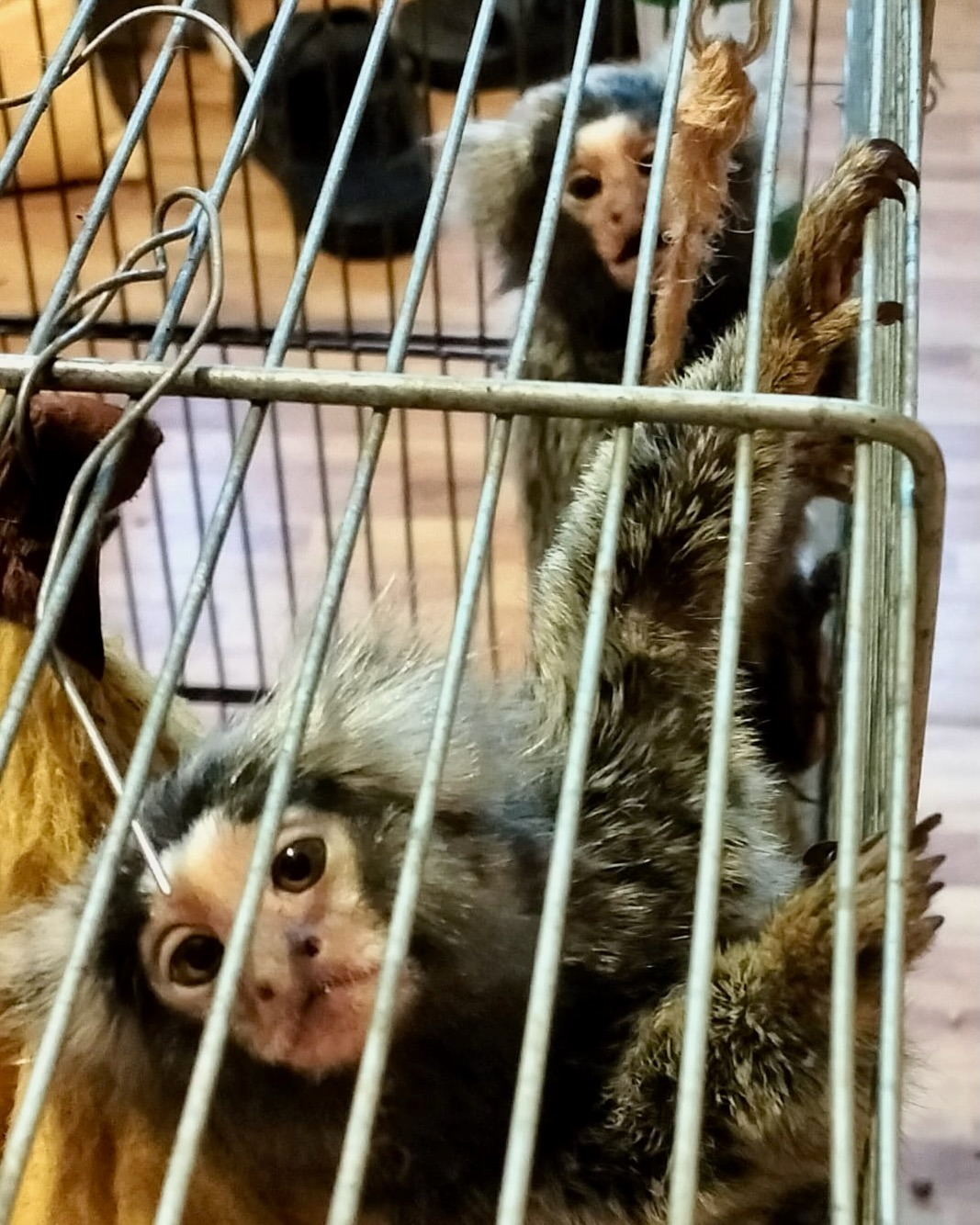
“How much are the monkeys?” Orlando asks, pointing to photos of marmosets.
“I have a pair and I wouldn’t really want to separate them because they lived together, they got used to it and it’s possible they could be pregnant.”
Orlando confirms the offer of 1400 per piece.
“We can discount the pair.”
The driver says he had a golden lion tamarin monkey, which is a highly endangered species in the wild, but he doesn’t have them anymore. This cost 4,000 euro. For the birds, he says he has papers, and he shows us one for the crane, but this is just a document detailing its DNA in Dutch.
The raccoon is 400 euro. A raccoon dog is available for only 250, and the driver can also give us the cage to transport the animal.
He adds:
“I’ll pack them up, no problem, the important thing is that you come with the money.”
Both raccoons and raccoon dogs are invasive species and their sale and keeping by private individuals is banned in the EU. At another premises, close to the driver’s, we find a private citizen who is keeping a raccoon dog like a pet pooch in his backyard.
The driver then adds that he has more to offer.
“We can bring anything, anything, and tigers if you want, but cubs.”
On the outskirts of Cluj next to the viaduct of the Autostrada Transilvania is a large truck park for hardening the tyres. At the back is a line of warehouses, which includes a dormitory for foreign workers from Asia. On a Saturday morning, workers from Pakistan and Nepal are on a side street, learning to drive scooters, so they can deliver 16-Euro shawarma to Cluj’s hipsters. Between the truck park and the workers’ sleeping quarters is a fenced-off enclosure stating “dangerous animals”. From the nearby slip-road, you can hear loud roaring.
This is where an auto-entrepreneur keeps his “pussycats of Gilau” as he calls them on Facebook. Regularly he uploads pictures of him playing with his four big cats, with the industrial park in the background. These four animals come from Soimaru, who has given them as “donations” to Abdul – a Bengal adult, younger Bengal, Siberian adult and a young lion, says a communication from the Environmental Guard.
“A lot of endangered species or dangerous animal species like large carnivores should not be in private hands – it’s dangerous for yourself, dangerous for your neighbour if it gets out, if it’s not held properly,” says Sybille Klenzendorf, senior wildlife conservation expert, WWF.
The Holy Relic
27 July
In the pond at the centre of Soimaru’s zoo is a small lake and a gazebo. On our next visit, Orlando and I catch fish with a large net using soggy pieces of bread as bait. We put the fish into a plastic wash-bowl, and take them to give to the turtles and to the eagle and otter.
Orlando is looking after the lemur enclosure. He lets people in and out and tells them how to behave with the animals, although he is not qualified or trained for this activity. While he is waiting outside the enclosure, he hears a kid screaming. He asks what’s wrong. The kid shows his finger, which is bleeding. His father says a squirrel has bitten him. Orlando takes the kid to the gift shop to pour iodine and disinfectant on the wound.
Hundreds are visiting Goliath, and taking videos and photos with the liger for TikTok and Insta. An empty drum that held Royal Canin milk for cats is nailed to the side of the enclosure. A neighbour of Soimaru takes the ticket stubs and puts them in the drum. He helps children over a picket fence and onto a plain of astroturf, covered in toys.
Children stroke the liger. People push their babies next to the liger. They smile or coo or say awww. The liger is indifferent. As they take picture after picture, it feels like a freakshow. The liger is exhausted, and possibly hyperventilating. Orlando picks up the liger and takes it to a room at the back of the zoo, where he sleeps.
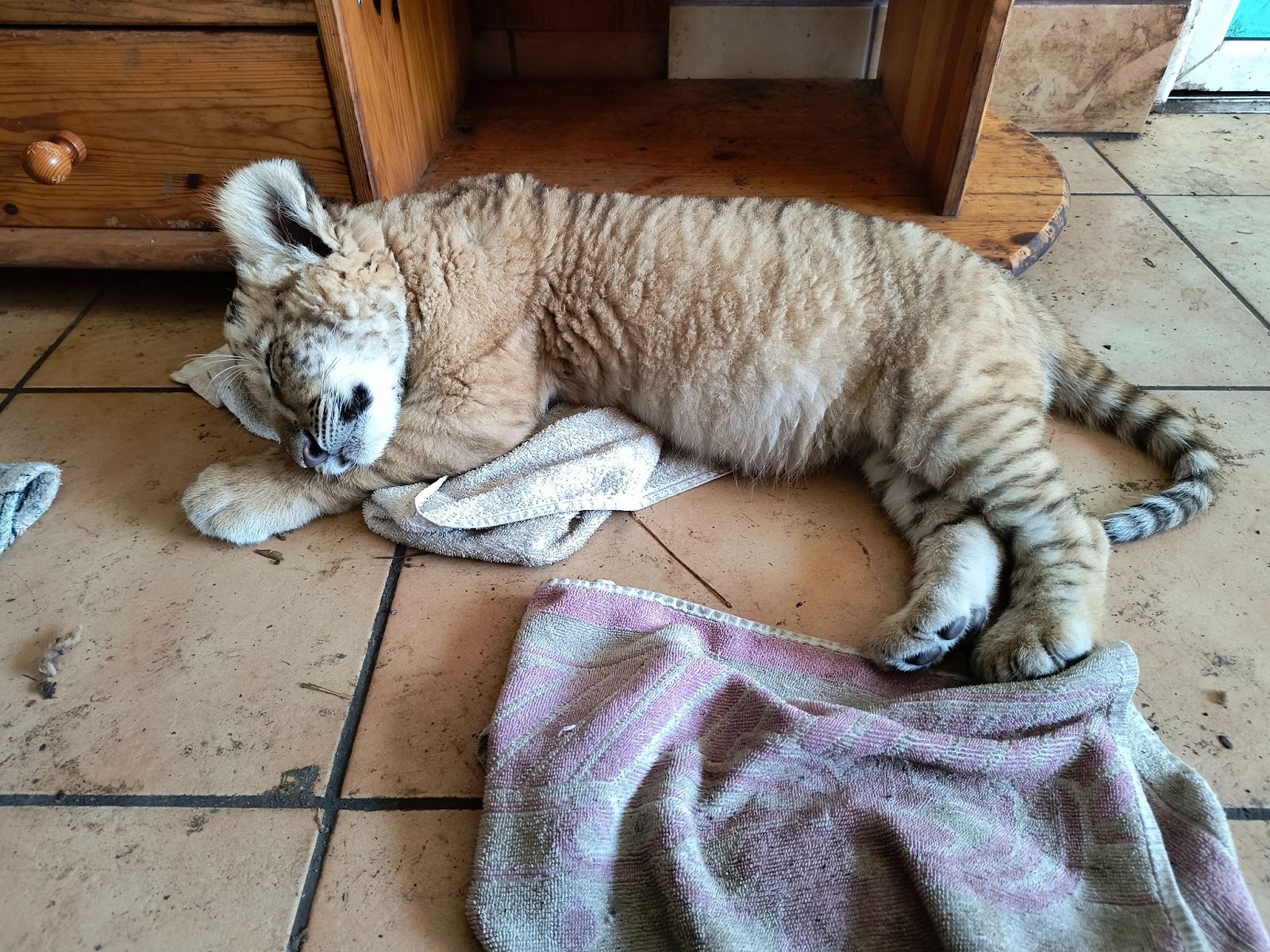
Goliath, asleep on a dirty floor
But in one hour, the liger will have to wake up and come back to the enclosure, as a crowd is waiting to take pictures.
At this point, Soimaru is away, and no one is in control of the zoo. Only one worker is there and one volunteer. It would be possible for Orlando and I to take the liger, put it in the back of our car, and drive away. Before anyone realises what is happening, we could be halfway to Bucharest.
Later Soimaru tells us that he had some problems with visitors.
“I’m not a church door,” he says. “Everyone who was standing in line was worshipping [the liger] as if it was a holy relic, at least to touch it, at least to put their hands on it.”
One family came with eight children.
“I had people throwing it up in the air like a wedding bouquet. And I said, ‘Lord, what are you doing?’ [They said:] ‘I gave you 20 lei, I’ll do whatever I want with it.’”
Orlando says that our client in Dubai, Mr Al-Sadek, has seen pictures of the animals. He is interested in Fina and the two lions.
With the white tiger, he needs official authorisation. But Soimaru offers to sell us the lions for 2.8K for the male lion and 3.5K for his mother.
The girl is more expensive “because she will have cubs”. This figure could include two or three hundred “for the autopsy” he will give to a doctor if there are no papers. The implication, as he has stated before, is that he will declare these animals as dead.
With these lions, he says to us: “Once you’re out of [my] yard, you don’t have them from me.”
The Raid
6 September
On Friday 5 September, a team of eight authorities and 16 armed police descends on Noah’s Ark to conduct a dawn raid.T his follows a clusterfuck of problems.
At the Zaharesti zoo, a five year-old child was taken to Suceava county hospital with a bite wound. The parents said this was from Goliath, the liger. The kid received care and then went home. Soimaru blames the boy’s father, who insisted on his son getting inside the enclosure with the liger. An investigation is ongoing. The local hospital also says there have been other cases of bites and scratches from the zoo.
A few days before this, a four-year-old girl was taken to hospital with a bite wound from one of the macaques. Soimaru says the girl placed her palm over the fence, and the monkey pulled her finger in and bit her.
In July, the DSV (Suceava Sanitary and Veterinary Department) gave Soimaru a fine of 3,000 lei, says the local press, for irregularities regarding animal welfare and problems with the hygiene of the premises.
The work inspectors came in to check he was obeying the labour law. They found staff at the zoo working there with no papers, and left Soimaru with a 24,000 lei fine.
The Gardul de Mediu ordered the closing of the zoo’s public activities, due to irregularities.
They have given Soimaru until 1 October to get his place in order.
Soimaru wonders why the authorities haven’t done anything until now.
“It’s like I came out of the sky with lions and tigers,” he says.
What makes him angry is that local officials “for 25 years” have been “sitting at the same table as me.” He addresses “all the commissars” angrily: “You stayed so many times with me and we drank. And now you come with bullet-proof vests at my place. You shut me down on a Wednesday and what were you doing the previous Sunday? You came with 14 or 15 people and your wife, where you filmed yourself with tigers and lions.”
Now he has to build two fences and visitors cannot interact directly with monkeys, or he will be shut down. It took him ten years to get authorisation for the zoo in Ilisesti, he says, which eventually happened in 2011. The new zoo, which opened in 2024, could not fulfil all the rules. He complains that the people in charge of authorising the zoos changed.
He says he can’t continue in this rhythm. He has to take his foot off the accelerator. He is sick, has heart problems, and says he wants to give up the zoo. But he does not have anyone to leave it too.
“My children have other jobs,” he says, sadly.
The Dead Room
13 September
Orlando is on the phone to Soimaru.
The white tiger, Fina, is undergoing surgery.
The zoo owner seems nervous.
“I don’t have clients, I have nothing,” he says.
“You are no longer open?”
“I am no longer open… a friend may come to donate something, what the fuck.”
Soimaru says that we can still do business, and “we can also think about Goliath.”
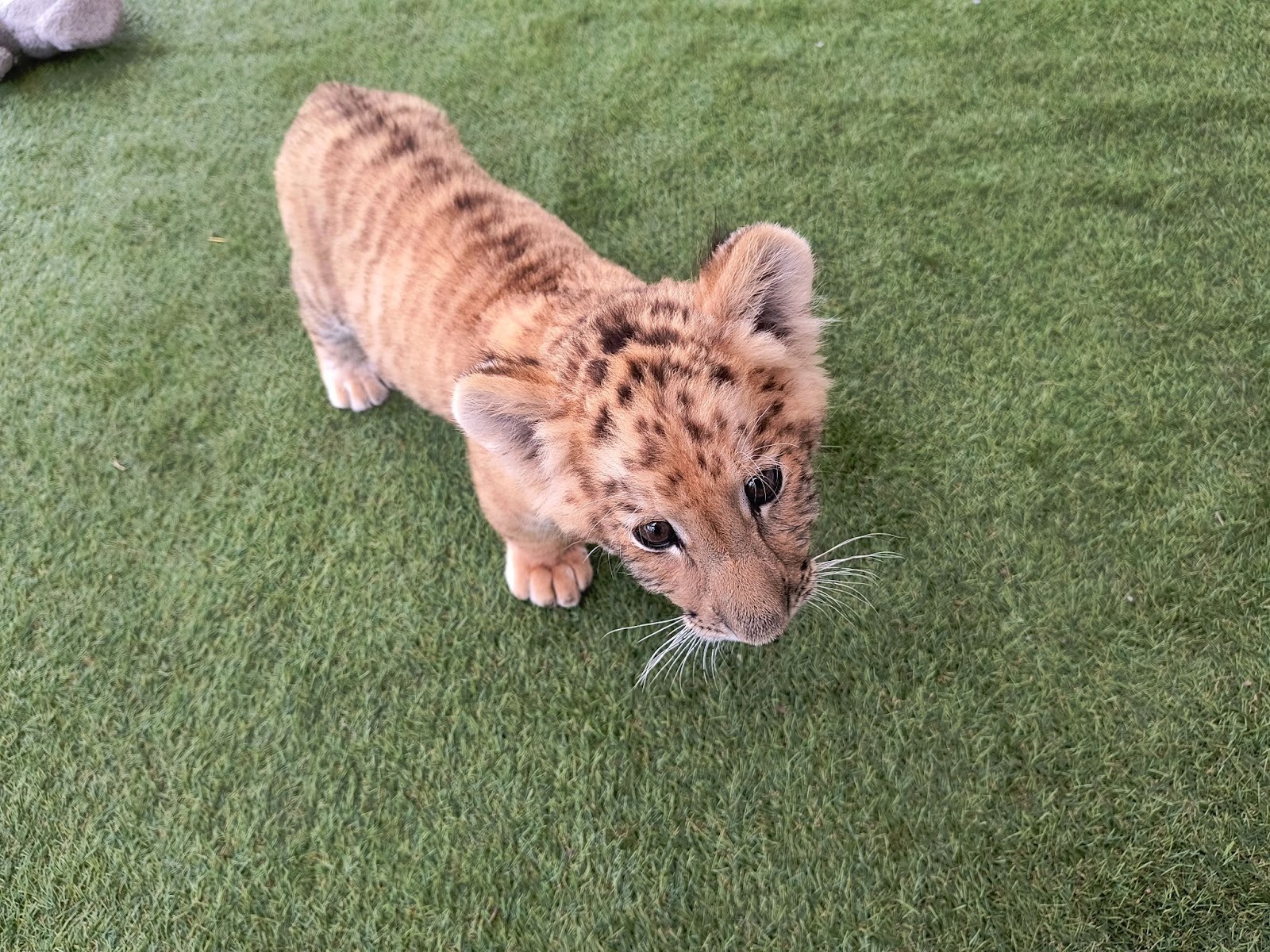
Goliath, for sale
22 September
Above the supermarket ‘Soimaru’ is an unfinished motel. This looks out onto his zoo, which is officially shut and unofficially open. There are no stairs, so we have to walk up a stepladder. The upper level is dusty and there are cabinets stuck with photos of Britney Spears, indicating it may have been decades since anyone tried renovating this place. By a dusty box is something small and grey with a camouflage pattern. At first this appears to be thick wire, but it’s coiled and stiff.
“Is that a petrified snake?” I ask Soimaru.
He’s not interested.
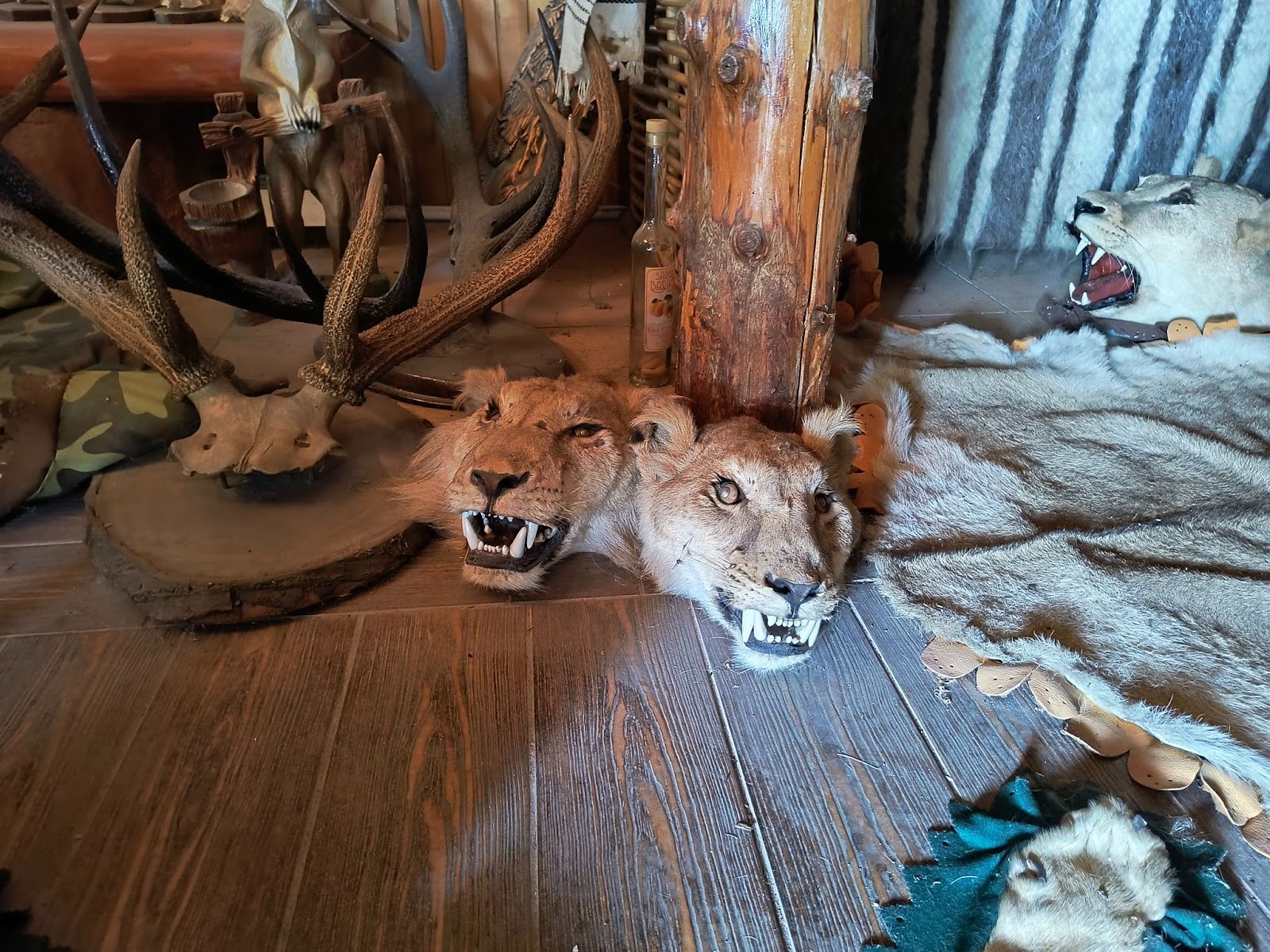
One room is decked out like a hunting lodge. Skins of wolves hang on a bar. Lines of deer skills perch on a mantle. There are stuffed, eyeless marmosets and blue macaws, their feathers ragged and shedding. A framed 3-D picture shows an Egyptian scene, with a buxom Jennifer Lopez in a bikini, reclining next to two tigers.
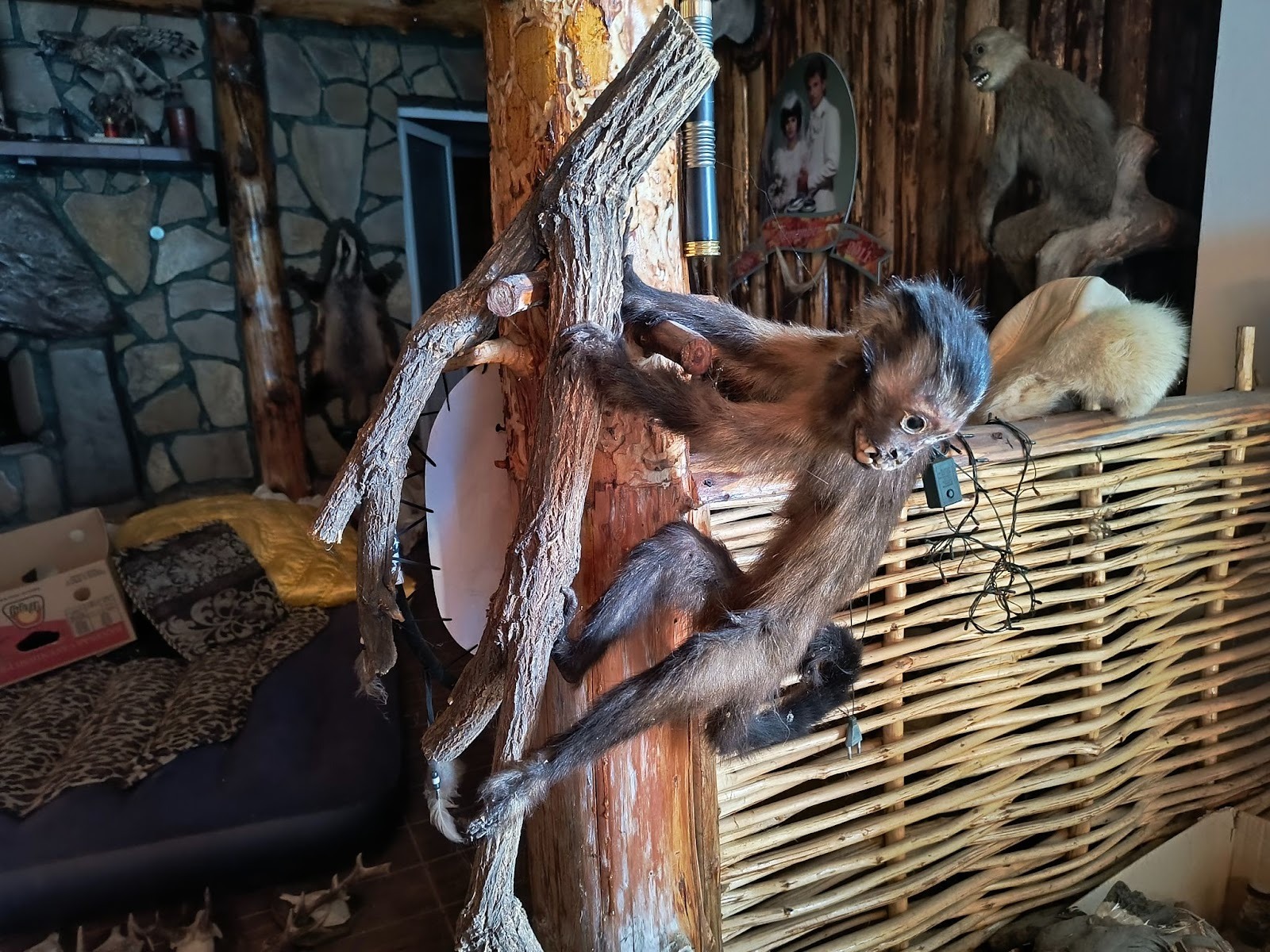
The floor is scattered with disembodied lion heads and tiger rugs.
We ask Soimaru if these are his animals.
They are, he says. He has someone who can skin and stuff animals, though won’t tell us who this is. Soon we realise this is a graveyard for all the animals he owned.
In the next room is a rug of a larger lion.
“Who is this?” I ask.
“The great grandfather of Goliath.”
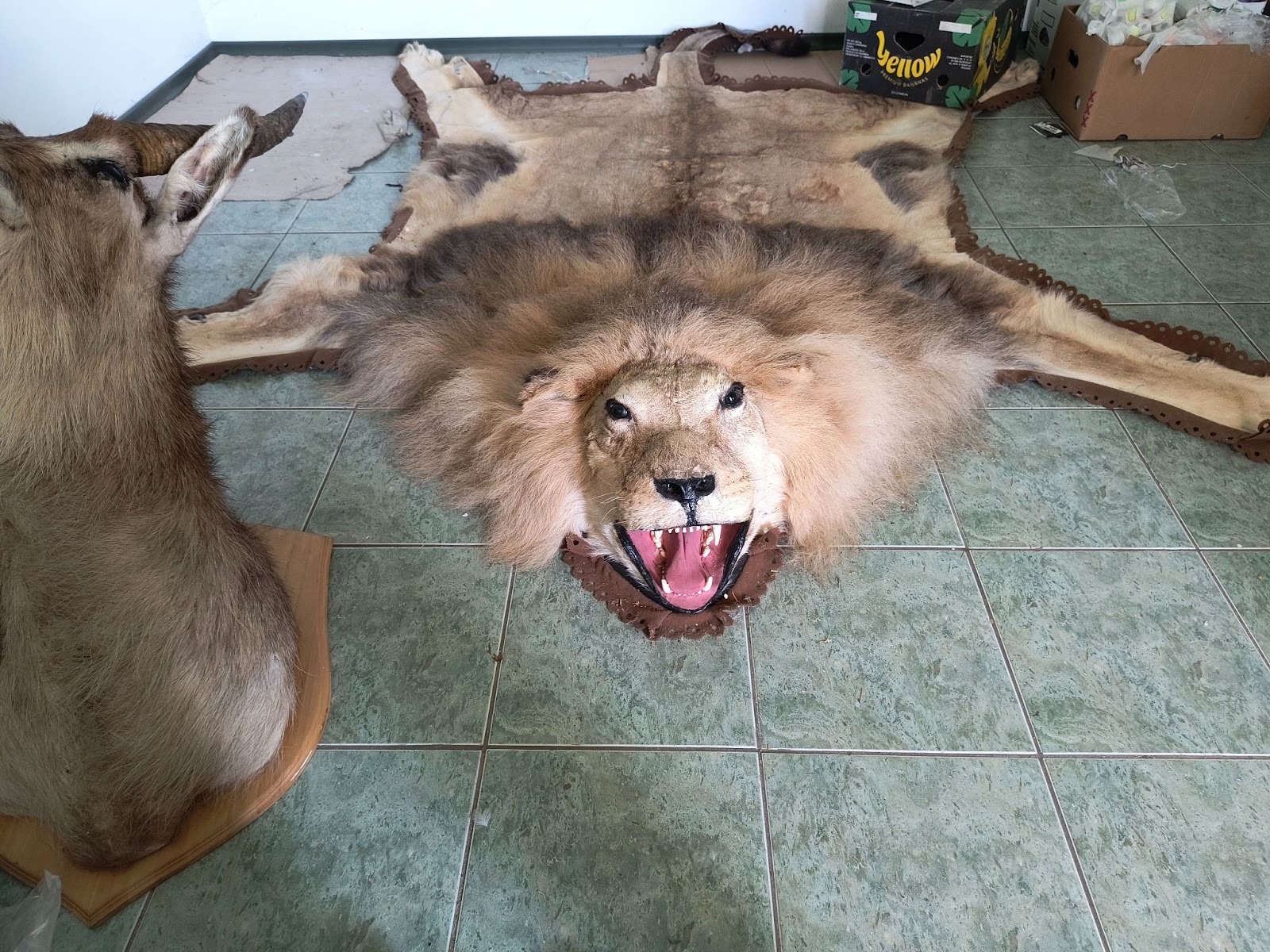
Goliath’s ancestor
At the back of the supermarket he shows us a large tiger, five years old. It sits there in a roofless concrete enclosure, head down, looking away from us. When Orlando brings the camera close to the big cat, it throws its weight on the fence, teeth showing, claws bared. If there was no wire between us and the tiger, we would be dead.
“This is the most beautiful tiger,” says Soimaru.
“What’s its name?” I ask.
He thinks for a second.
“When he was younger,” he says, “it was Killer.”
He hasn’t been given a name since.
We sit outside his supermarket on plastic chairs and negotiate. He wants to sell a package of animals because he needs money.
We tell him Ahmed Al-Sadek is interested.
“The tiger from here [Killer] is the most beautiful for 7000. The servals, still as a package, let’s say 6500 for both of them, no leave it at 6000.”
He will also sell two newborn baby tigers for 5000 each. Fina the white tiger could sell for 12,000 to 15,000.
“And now for the most sensitive part,” says Orlando, “ have you thought about Goliath?”
“For Goliath, tell him to name a price.”
In Dubai he says that visitors to zoos where ligers are present pay “500 to 700 euro” for a photo.
A ‘Jewish guy’ came to visit him in the zoo and offered him “six figures” for the liger, he says.
He can offer half of that, which means 50,000 euro.
“How should we make the payment?” Orlando asks. “Bank transfer?”
“Not as a donation,” he says. “We will write some lower prices and the other amount like that.”
We drive to Zaharesti to see two baby tigers. A sign reads temporarily closed on the exterior. Fina’s cage is overgrown with weeds, so it’s clear she has been away a long time receiving treatment.
He shows us how he is reforming the zoo so he can reopen on 1 October. He takes us to a small grassy enclosure, where he plays with Goliath.
“Does he miss his mother?” Orlando asks.
“How would he know his mother if he wasn’t breastfed!”
There is now an extra layer of bars around the monkey cages. The macaques are frantically moving about, jumping, always trembling.
Soimaru points to a thin primate standing on the other side of the fence, its head twitching.
He turns sullen and angry.
“Pizda mă-tii,” he says to the female monkey, who was the one who bit the young girl, an insult which can best be translated as ‘Go to your mother’s cunt’.
“She is the one who destroyed the zoo,” he adds.
The Last Pitch
23 September
We’re on the phone with Soimaru. He’s a little panicked.
“I made a decision to make it faster and more urgent. I have to take some action because it’s getting cold.”
Orlando asks how Fina is doing.
“Eating, playing. Come,” he says. “If you are dealing the cards, let’s do it.”
“I have 5000 euro cash.”
“What can I do with this?”
“I can give you cash now for the two small ones and Goliath.”
“What can I do with 5000? We can’t even talk.”

Fina is growing. Her price is dropping: 8,000 euro
11 October
Soimaru wants to meet us in a sauna and talk, but by the time we rock up at the zoo it’s seven o’clock.
When we arrive, it’s dark. Soimaru tells us he wants to speak, but without phones present. We place the phones on a pile in the zoo gift shop.
At the meeting, he speaks freely, and we have no record of this, so we wrote down what he said immediately afterwards.
He says we can take the two baby tigers right now “under your jacket” as he has not registered them with the authorities for 10,000 euro in total.
“Don’t say they are from me,” he says.
The white tiger, Fina, is sick, and still recuperating at the vets. Because her health is poor, he can sell her for a half-price discount of 8000 euro.
He needs the money to pay for the vet and the person looking after the tiger. He has been selling a lot of animals, including snakes and turtles to someone from Bucharest. He offers us squirrels from Thailand for 550 euro a piece. Many species of squirrel are declared invasive species by the EU, and their sale is banned.
We tell him we need to talk to Ahmed Al-sadek, of the zoo in Tripoli, to see if he is happy about these prices.
Two hours later we are sitting in a gas station on the road to Bacau. We decide to lowball him. We know he will be angry.
“Ahmed wants to negotiate,” says Orlando. “Fina for 3 and the two small ones for 2.5.” [meaning 3,000 and 2,500 euro].
Soimaru is annoyed.
He says:
“This is not an offer, this is a game.”
He adds that he knows Fina has a problem and the vets will need to look after her. She still remains in another location and only in a few weeks will she return to the zoo, he hopes.
“God forbid, if it doesn’t work out well, I’ll make her into decorative fur.”
Referring to our price of 3,000 euro for the live animal, he says: “the trophy is more expensive than an offer like this.”
We think of his graveyard of animals in a room above the supermarket in the unfinished motel. The stuffed lion heads. Goliath’s ancestor immortalised as a rug.
We fear this could be the fate of Fina.
Aferword
EU solutions: go positive or negative
Laws regarding the sales of dangerous and wild animals as pets are not harmonized in the EU, Schengen Zone and in the EU candidate countries. This means an animal could be legal to own as a pet in Romania, but not in Bulgaria, and in France, but not in Belgium. There are also different laws in the states of Germany.
One method which has been used in Bulgaria is a ‘negative list’, which means a list of animals who cannot be kept as pets. This would eliminate the sale of popular animals who are endangered or vulnerable in the wild, such as lions, tigers and macaque monkeys.
The downside of such a list is that it would be hard for the police or authorities to determine whether an animal is legal or illegal without a DNA test. This could be especially tough for snakes and lizards and for cat hybrids, such as caracat – a mix of a domestic cat and a caracal. Such a list is also not ‘future-proof’ for the trade of exotic animals from other parts of the world, therefore would always be lagging behind.
An alternative is a positive list of animals which can be traded or exchanged and kept as pets. This would be an agreed list of animals across the EU who can be companion animals.
“A positive list adds clarity, and eases the burden for law enforcement officers, border control and helps consumers understand which species can be legally kept and traded,” says Nick Clark, wildlife programme leader, Eurogroup for Animals. “It future proofs the law, so new species targeted by traffickers for the illegal pet trade are already covered. The fewer species in trade allows easier implementation of other measures which can help the fight against trafficking, such as demand reduction strategies for illegally sourced animals, and better data collection and transparency throughout the trade chain.”
Positive lists already exist or are being drawn up in France, Spain, Italy, Malta, Netherlands and Belgium. “This is the first step,” says Saimar Shehu, Four Paws co-ordinator in Albania.
The downside is that animals could be traded on the black market – but this is already happening without such a list. It would be highly restrictive on pet owners, and would probably need to start with mammals at first. Another issue is that it would need to be EU-wide, or it would not work. It would be ridiculous for an animal to be on one country’s list and not on another, which is what is currently happening in Belgium and the Netherlands, for example.
“The second step is: what do we do with animals that are being kept illegally?” says Shehu.
One solution is that any exotic animals kept as pets could live out their lives as companion animals under a ‘grandfather’ or ‘sunset’ clause, which gives amnesty from prosecution to the owner.
But a problem is that people buy animals and then discard them when they don’t want them. This especially happens with big cats, who are fun and playful when young, but as they grow older, become moody and sullen.
In Albania, for example, NGOs believe there are 60 big cats and hundreds of monkeys. Many of the big cat owners are now contacting Shehu to ask him to find a new home for their adult lions and tigers. But a problem is a lack of places for animals in shelters and zoos.
Prevention remains the best means of dealing with this problem. Meanwhile, in Romania, there is no database of exotic animals, so no one knows how many there are.
“We need to stop animal trafficking before it gets out of control,” he says.
 Michael Bird Writer & Journalist